
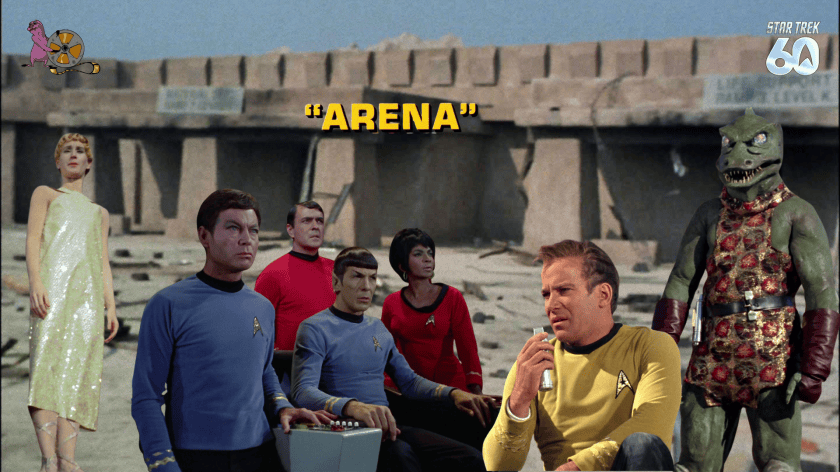
“We’re a most promising species, Mr. Spock, as predators go. Did you know that?”
Last night I watched “Arena”. This was the 20th episode of TOS to be produced and the 18th to be released. The original airdate was January 19, 1967. The story is by Fredric Brown and the teleplay by Gene Coon.
Story
Is it a coherent story?
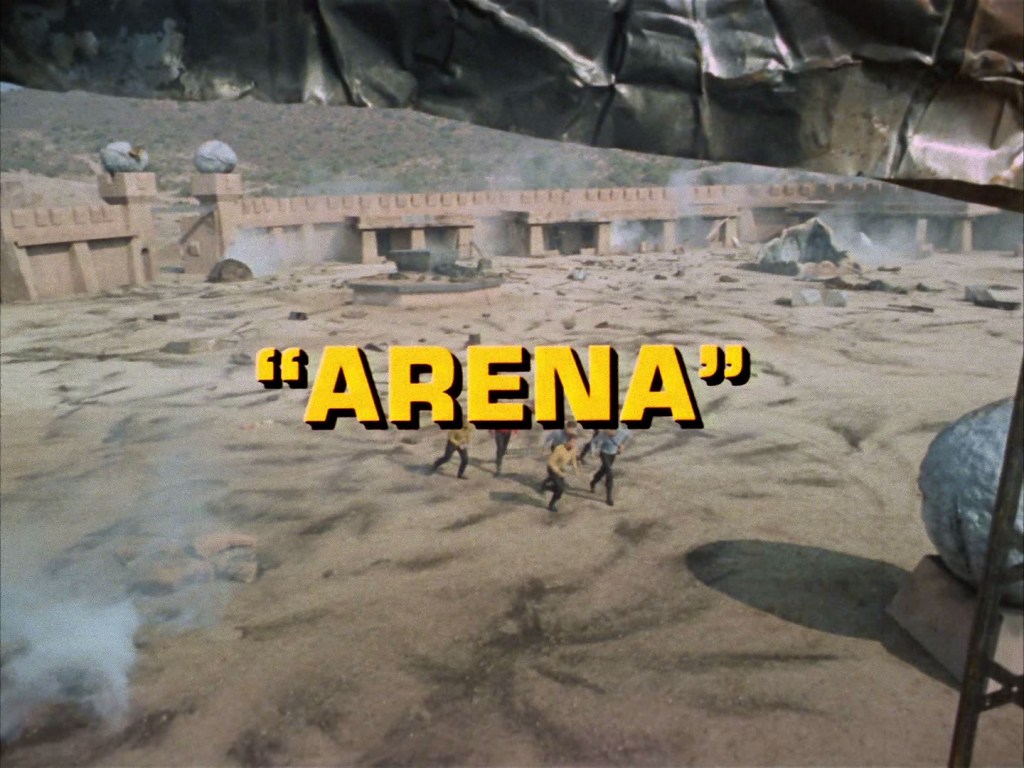
The Enterprise crew beam down to a Federation outpost on Cestus III only to discover the outpost has been destroyed and a trap has been laid for them by the Gorn. A mysterious alien race called the Metrons witness the battle between Starfleet and the Gorn and decide to intervene. They pit Kirk and the Gorn captain against one another in personal conflict. 4/5
Is it enjoyable to watch?
This might be the most famous episode of TOS. It’s a classic because of the wonderful design of the Gorn and because it gives Kirk an opportunity to demonstrate both his intelligence and mercy. It’s also one of few episodes, like “The Menagerie” where our crew get to watch Star Trek on Star Trek. 5/5
Is the dialogue strong and/or memorable?
There are a few memorable exchanges in this episode. For example:
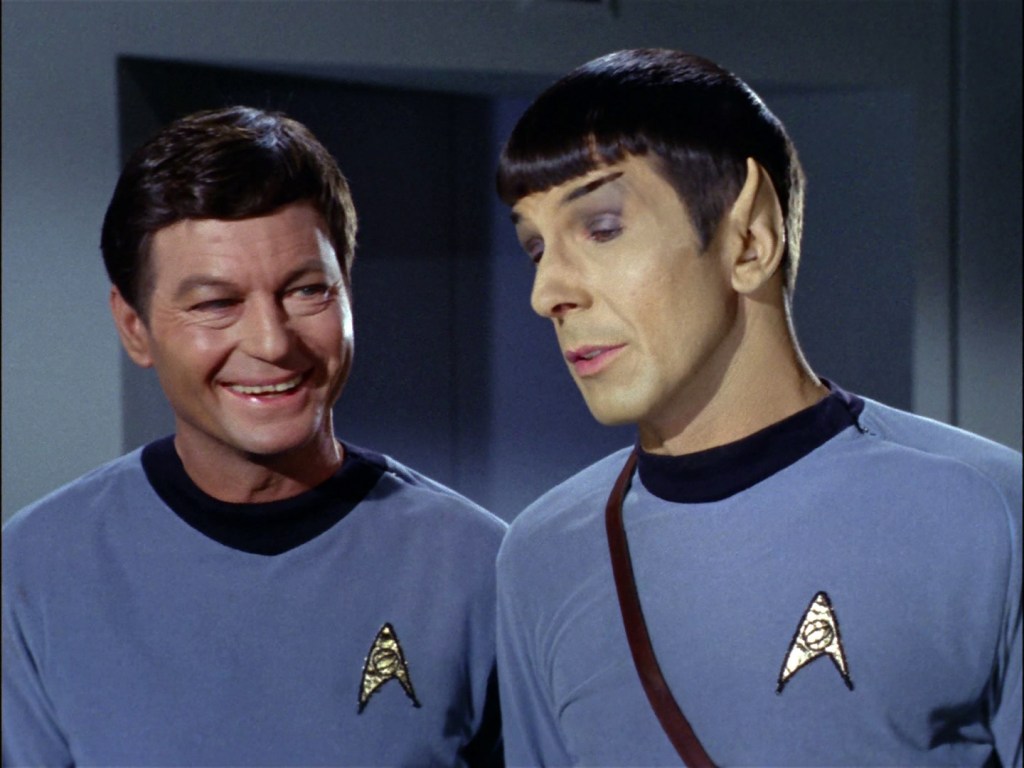
Spock – “Doctor, you are a sensualist.”
McCoy – “You bet your pointed ears I am.”
And this from the episode’s ending:
Kirk – “We’re a most promising species, Mr. Spock, as predators go. Did you know that?”
Spock – “I’ve frequently had my doubts.”
Kirk – “I don’t. Not anymore.”
For some reason, I also have always remembered when the Gorn captain says, “I weary of the chase. Wait for me. I shall be merciful and quick.” 4/5
Does it serve the main cast well?
This is a big episode for Kirk. It shows that he can be quick to anger when lives are lost. After the Gorn destroy the outpost on Cestus III, Spock argues for sparing their ship; there may have been a misunderstanding. Kirk snaps back that they are the only policemen available and a crime has been committed. I don’t particularly like the idea that part of Starfleet’s job is policing space but we do get that a few times throughout TOS.
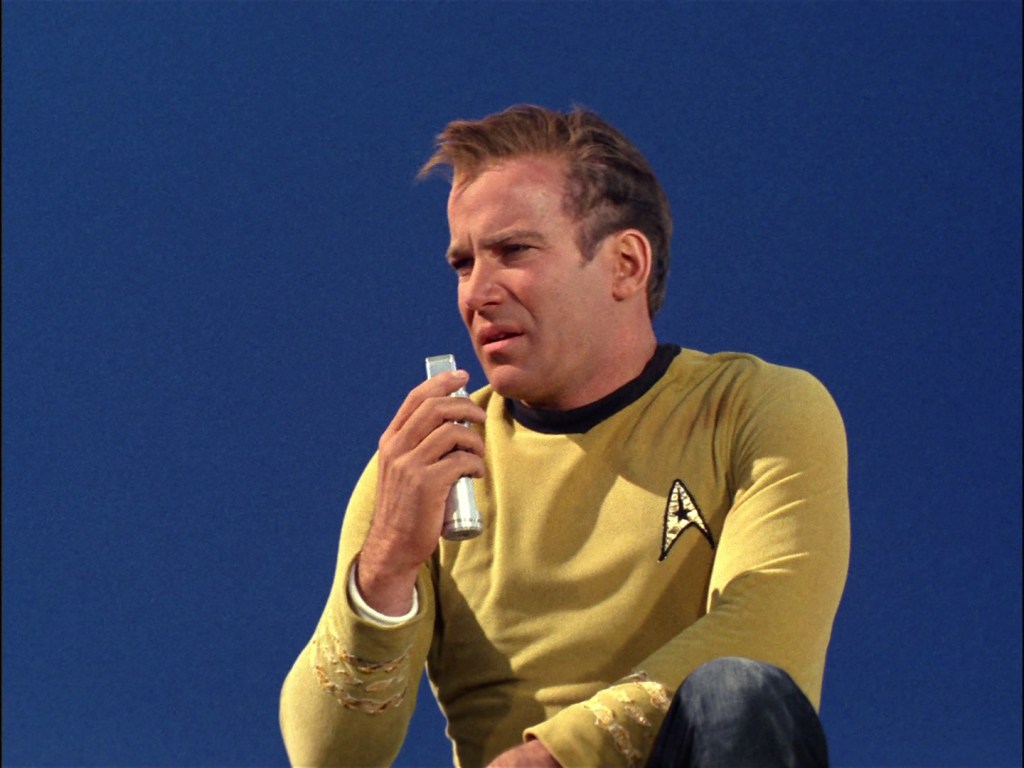
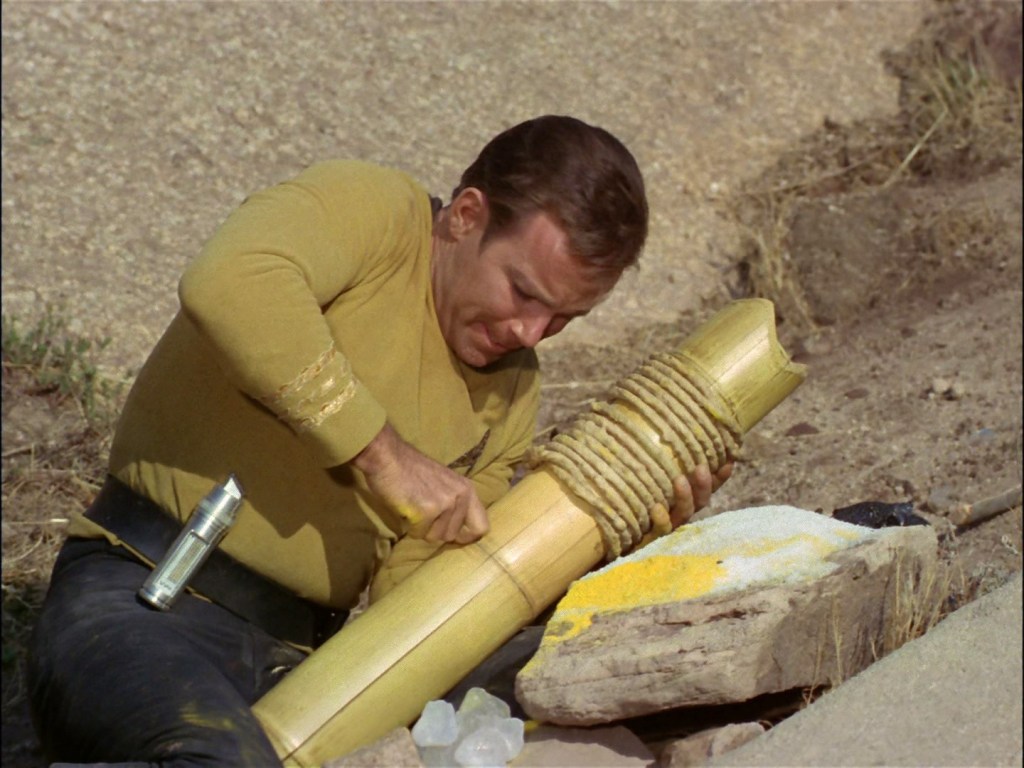
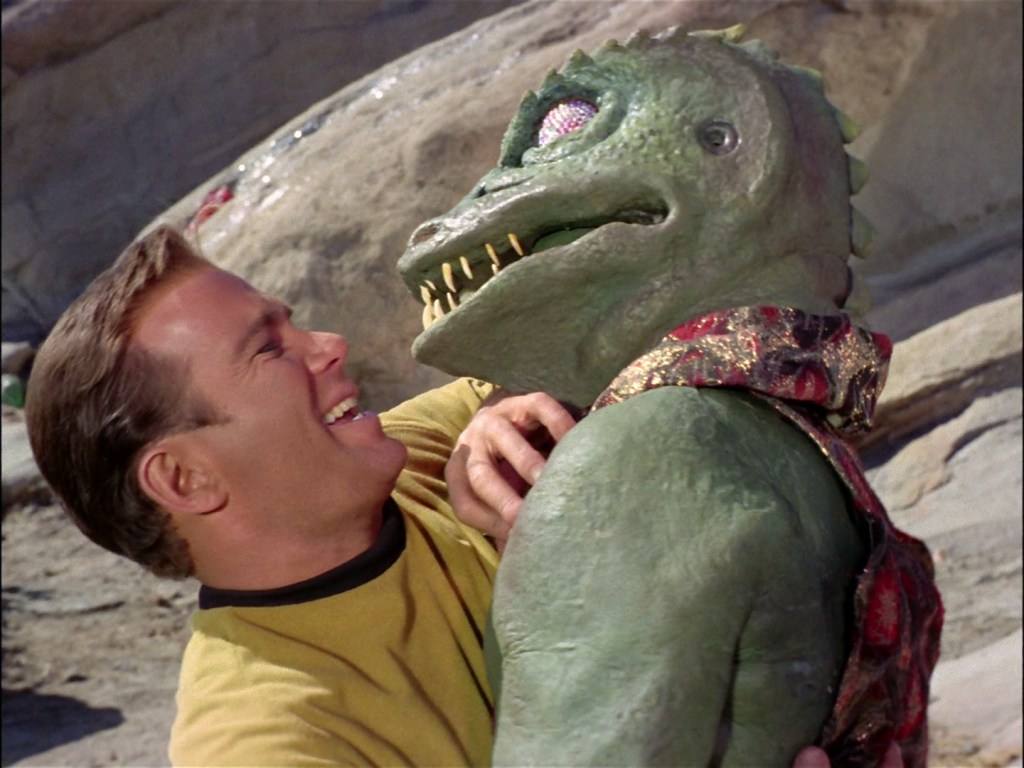
Later, we see an example of Kirk’s intelligence when he puts together a cannon-like weapon from natural materials on the surface of the planet where he’s been pitted against the Gorn captain. Finally, we see that Kirk is capable of mercy. When he defeats the Gorn, Kirk refuses to kill him.
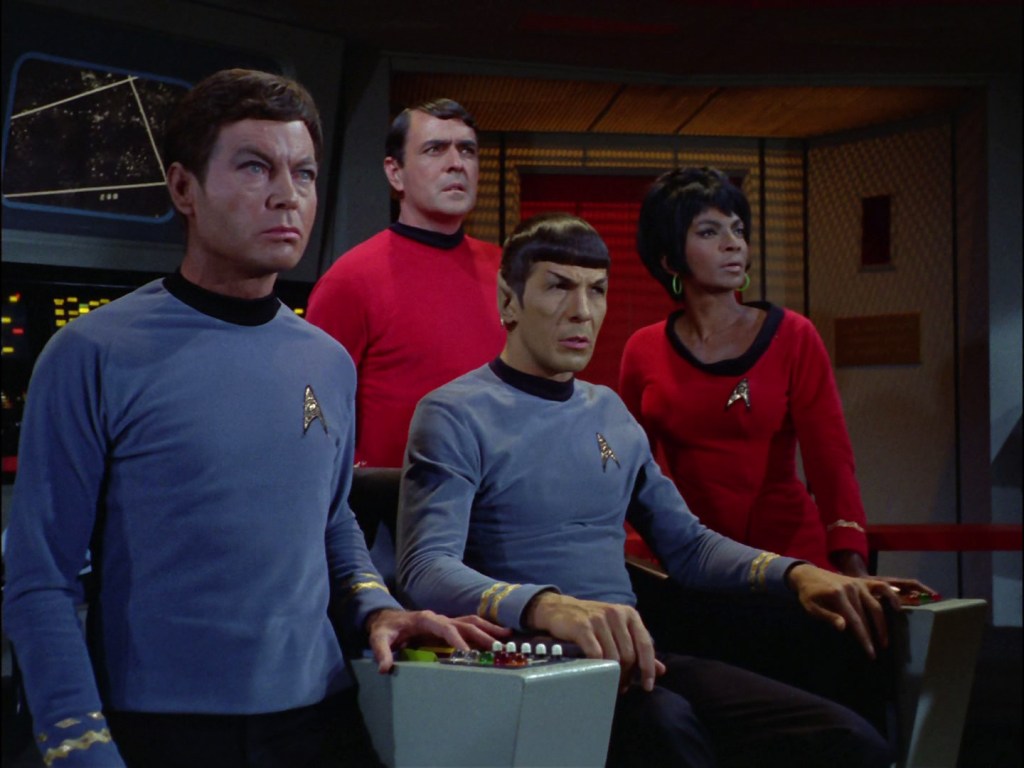
Spock and McCoy have some nice moments together on the bridge while discussing the problem and, later, while watching Kirk’s battle. 5/5
If there are guest or recurring characters, are they memorable or interesting?
There are actually quite a few named Starfleet officers in this episode but they don’t play particularly important roles. It does feature one of the few actual Red Shirt deaths in the first season of TOS. I think the first one was in “What Are Little Girls Made Of?”
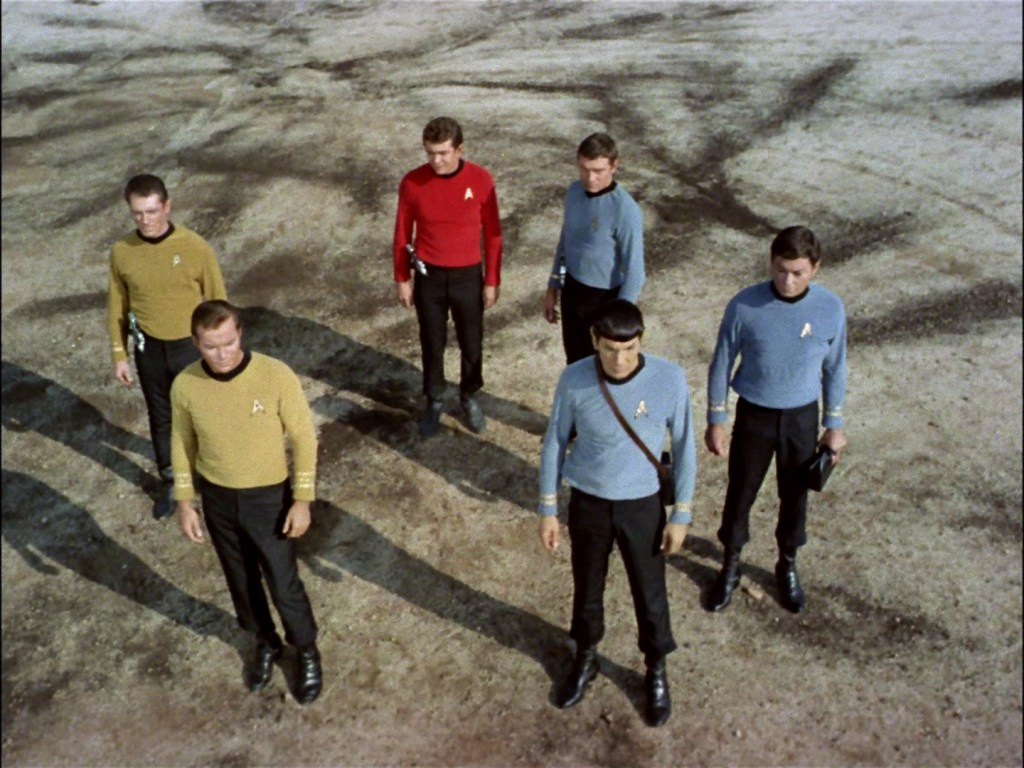
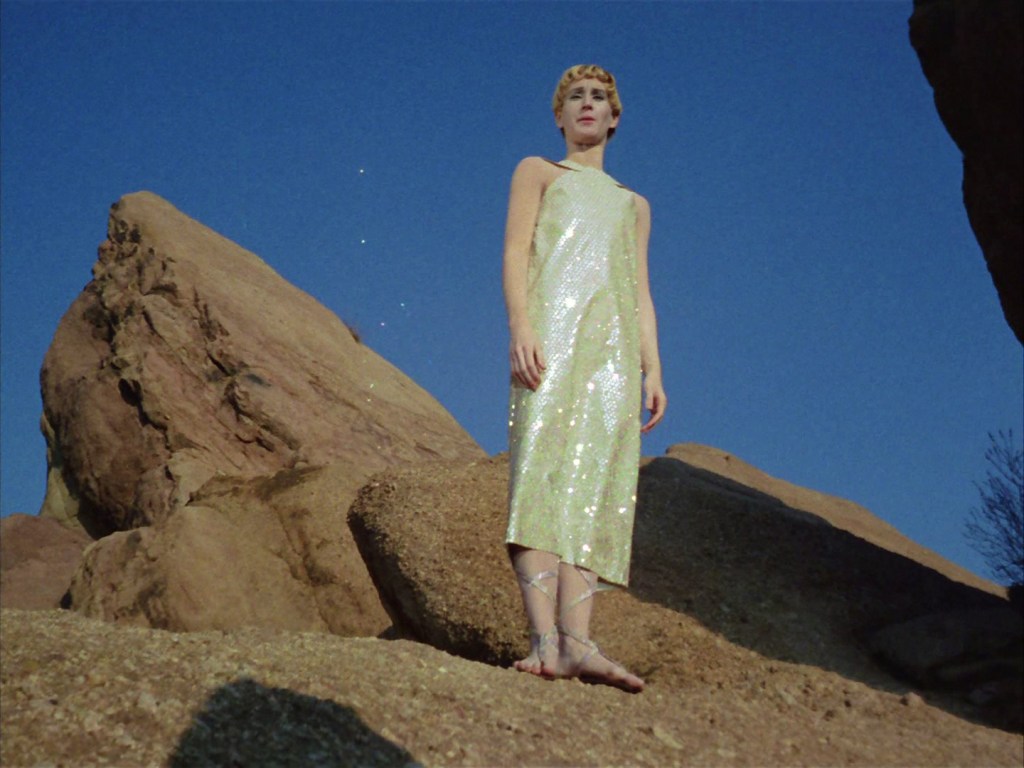
The most memorable guests in this episode are Bobby Clark as the Gorn captain (with Ted Cassidy’s voice), and Carole Shelyne as the Metron (with Vic Perrin’s voice). The image of Shelyne standing at Vasquez Rocks is one of the signature images of TOS for me. There are several signature moments and images featuring the Gorn captain. I met Bobby Clark at a convention around 2009 and he was a very warm, kind guy. However, it’s really the costume that’s memorable. 4/5
World-building
Does it contribute positively to the Trek Universe?
The name Cestus III is very memorable. It gets mentioned several times in later Trek series so it would seem to be a planet in a frequently travelled area of space. The introduction of the Gorn is very important to the Trek universe. They are one of the most recognizable alien species and it’s really only from this episode. There is a brief appearance of a Gorn in The Animated Series, and again in Enterprise and that’s it until Strange New Worlds reimagined them almost 60 years later.
Also, this is the first episode to mention photon torpedoes! 5/5
Is it consistent with the rest of canon?
This is yet another example of canon being established in TOS and then being changed by events in Strange New Worlds. It was consistent for most of Trek’s history. 5/5
Is there something new and unique?
The Metrons are yet another super-advanced species that seem to enjoy watching and judging Humanity. It’s maybe the first example of us being judged where we surprise the judges, but this will happen often enough that it becomes a trope. The Metron says to Kirk, “By sparing your helpless enemy who surely would have destroyed you, you demonstrated the advanced trait of mercy. Something we hardly expected.” And later, “You are still half savage. But there is hope.” That hope is central to Roddenberry’s vision of the future. 4/5
Does the science seem plausible?
Mythbusters famously discovered that Kirk’s cannon would not likely work. He was more likely to blow himself up than to fire projectiles with it. Aside from that, I made two notes about the Gorn scientific superiority. On Cestus III, they somehow lock on to Spock’s tricorder and cause it to explode. This seems to surprise Spock. The Gorn are also able to fool the Enterprise with false messages to lure them to Cestus III. They must, therefore, have pretty advanced technology or the Enterprise crew would have figured it out.
One more thing here, is that both Kirk and Spock refer to diamonds as being the hardest substance in the universe, but in “Balance of Terror” we learned that Rodinium was the hardest substance. Which one is correct?! 3/5
Production
Production design (sets, props)
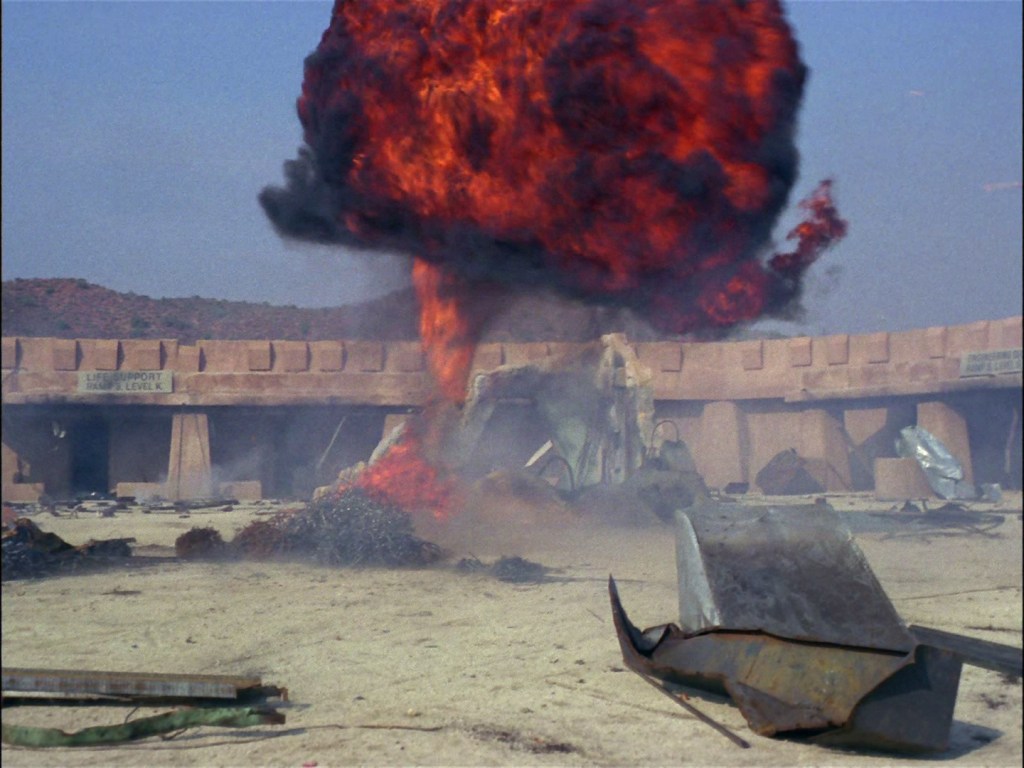
The set for the remains of the Cestus III outpost was apparently originally built for a film about the Alamo in the 1930s. The Trek budget could never have built something so large. Using it really expands the breadth of the episode. They also visit the familiar Vasquez Rocks. In terms of props, the Gorn’s carved knife, the recording devices given to Kirk and the Gorn by the Metrons, and Kirk’s cannon are all highly memorable. They’ve made cool action figure accessories ever since. 5/5
Costumes
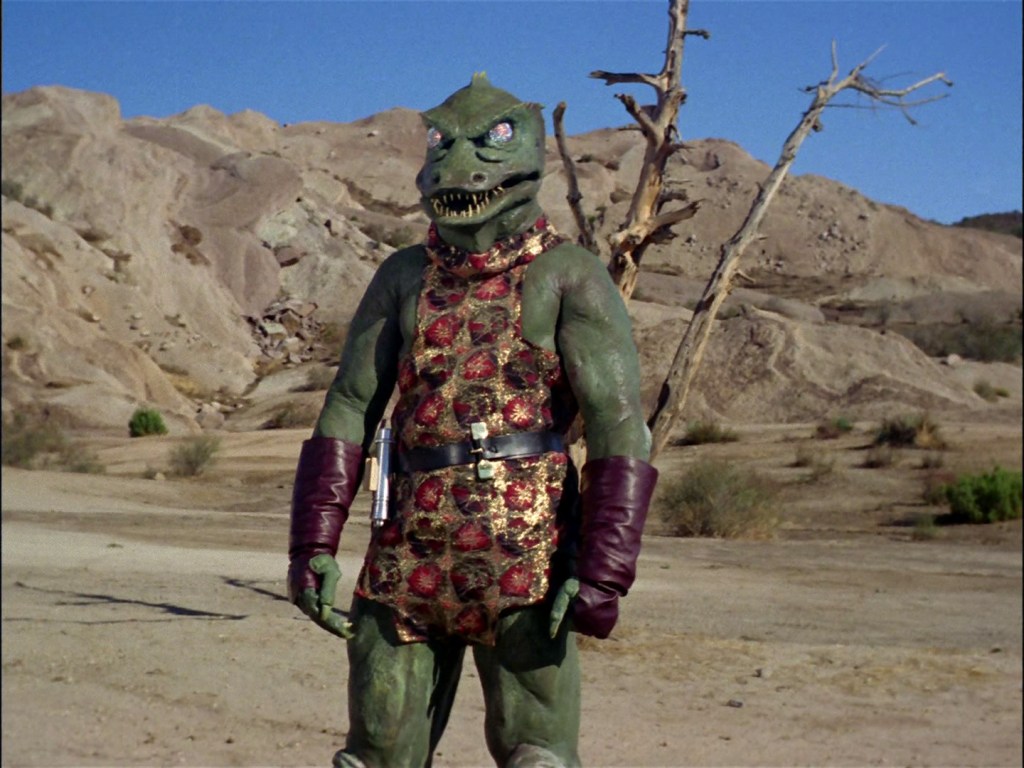
The standout costume is obviously the Gorn suit. We have seen other full-body creature costumes before, like the Salt Vampire in “The Man Trap” but the Gorn suit is definitely the most famous. People like to criticize it as cheesy but I think it’s actually quite advanced. When people have tried to recreate it more recently it’s always very bulky. If you look at the original suit it really hugs the body. The texture is also great. It’s the limited movement it allowed that people are judging. Future Trek series rarely did full-body aliens. This is an area where TOS stands out. 5/5
Make-up and Hair
I made a note that Uhura’s wig looks really great in this episode. The Metron’s make-up is unique. 4/5
Visual Effects
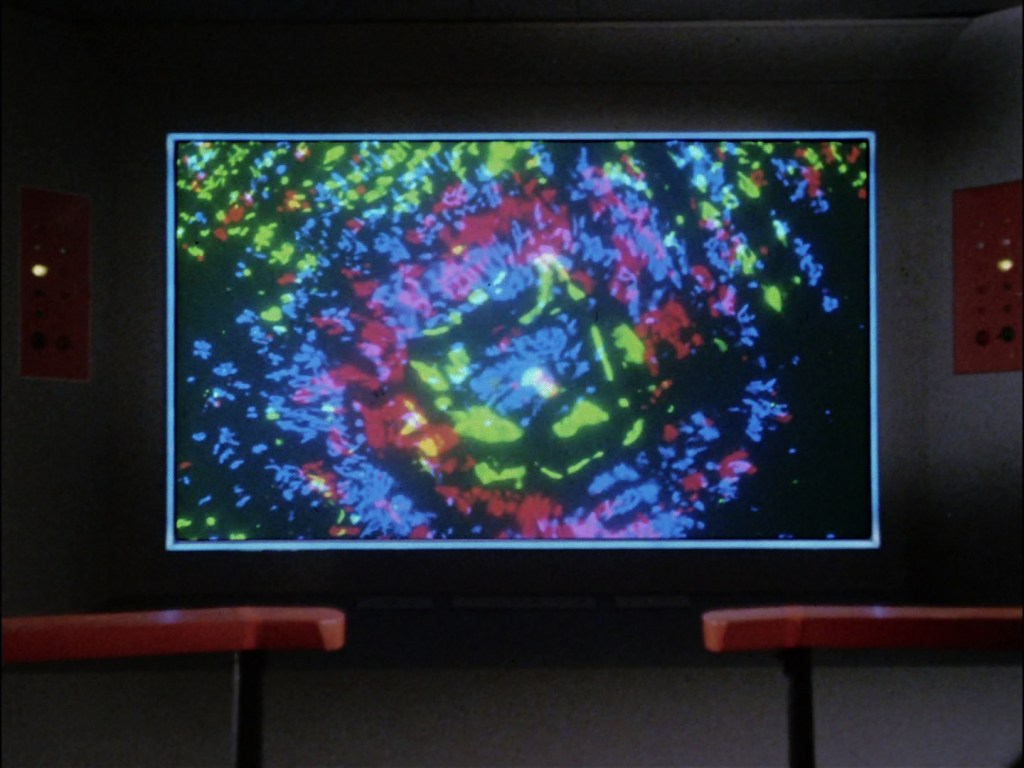
There are a lot of physical special effects (explosions on Cestus), but fewer visual effects. Notably, the Metron on the viewscreen is an interesting animated effect. In the remastered edition, they digitally extend the outpost set, making it even more expansive. They also, famously, animated blinking eyelids on the Gorn which is a really nice touch. 5/5
Music
The music for this episode was written by Alexander Courage. It doesn’t stand out to me but it works well. 4/5
Acting (series regulars and guests)
The regulars all do a great job. I think the voiceover cast is strong. I always enjoy Ted Cassidy and Vic Perrin does a good job with the Metron. 5/5
Direction (coherent, memorable)
This is the first of many episodes directed by Joseph Pevney. I think he did a great job with it. 5/5
Philosophy
Is it thought-provoking?
The notion of advanced alien cultures monitoring and judging us always sticks out to me. This idea would seem to come from Humanity and our anthropological studies of other Earth cultures. It’s usually a very colonial, and often racist, process. The question is whether any one group of people has the right to judge another. We’ll later get into the Prime Directive which suggests that Humanity has abandoned this practice by the 23rd century. 5/5
Does it deal with a moral or ethical issue?
Aside from the idea that diplomacy is better than a military solution whenever possible, the real ethical issue for me is this interference from a super-advanced race. What gives them the right to monitor and judge the actions of “less advanced” species? All the evidence from Earth history would suggest that that’s almost never a good idea. 5/5
Is it consistent with Trek’s optimism and Humanism?
I think the ending is. Kirk has kind of learned a lesson and the Metron suggests that Humanity shows promise. That leaves us with hope that we’ll continue to grow out of our childhood as a species. 5/5
IDEA (Inclusion, Diversity, Equity, Accessibility)
What occurs to me here is the idea that Kirk has an “instinctive revulsion” of reptiles. He suggests that all Humans do, which I’m certain is not true. Kirk says he needs to constantly remind himself that the Gorn is intelligent. This is very problematic and also comes from observing one group of Humans interacting with another. For centuries, white colonizers judged a person’s intelligence by their race (some people still do). There’s no proven correlation between the two things. It’s just racism. That’s true on Earth and in space. It seems Kirk is more able to accept a humanoid alien like Spock than he is to accept a being that looks less like him. 3/5
Conclusion
My ratings for this episode total 90/100 which puts it in the top 5. We’re in a particularly good stretch!

