
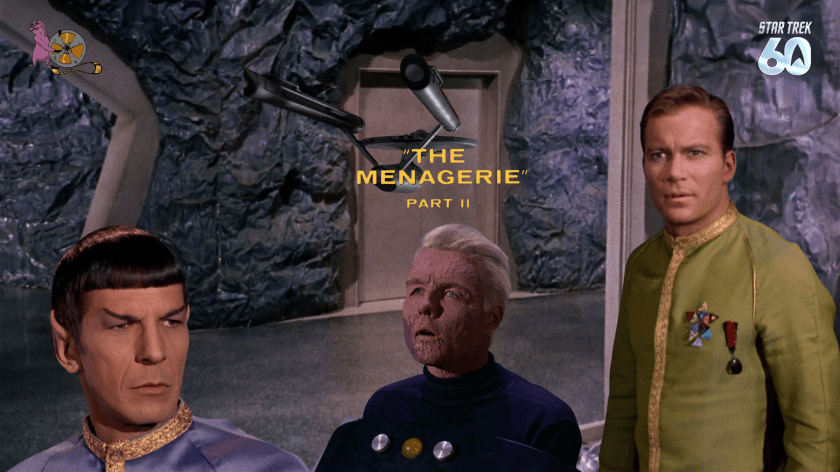
“I see no reason to insult me, Sir. I believe I’ve been completely logical about the whole affair.”
Last night I watched “The Menagerie, Part II”. This was written by Gene Roddenberry. It was the 17th episode produced, but the 12th to be released. It first aired on November 24, 1966. This post will be shorter than usual because I’ve covered most of what I wanted to say in the reviews of “The Cage” and “The Menagerie, Part I”.
Story
Is it a coherent story?
This continues from Part I. The bulk of the episode is footage from “The Cage” and the story comes to a satisfying resolution for Pike. 5/5
Is it enjoyable to watch?
Yes, this is one of the few episodes where our characters get to watch Star Trek on Star Trek. 5/5
Is the dialogue strong and/or memorable?
There’s the great line from Spock at the end of the episode when Kirk accuses him of having a regrettable tendency towards flagrant emotionalism: “I see no reason to insult me, Sir. I believe I’ve been completely logical about the whole affair.” 5/5
Does it serve the main cast well?
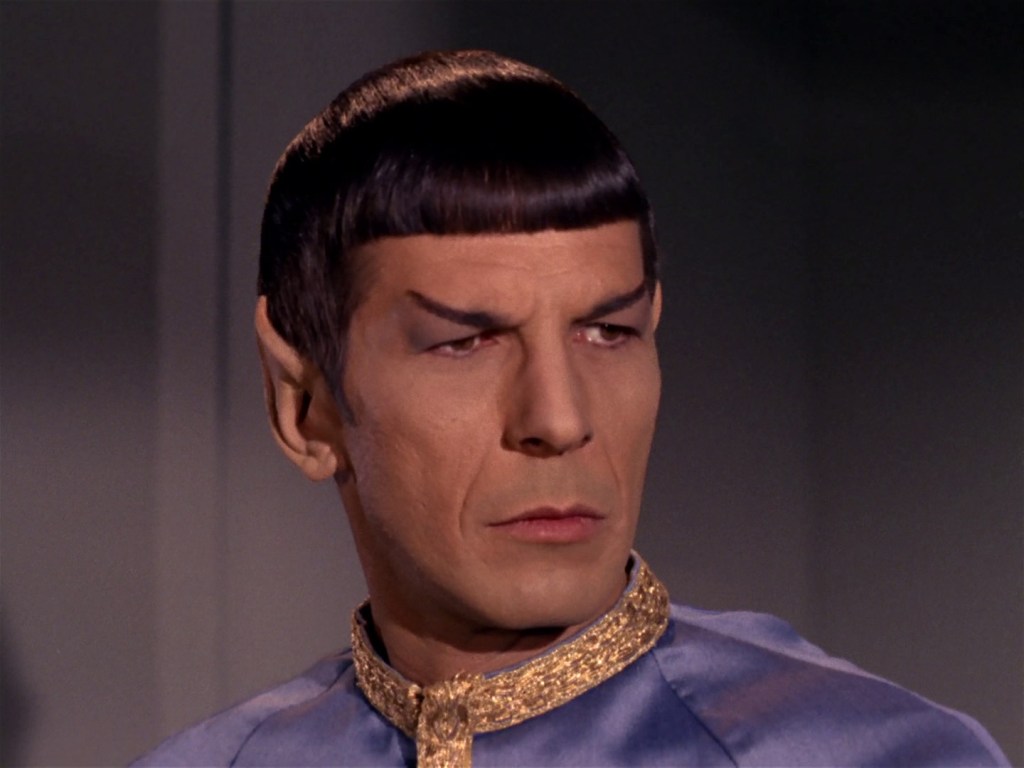
Spock and Kirk are mostly well served by this episode – as long as one doesn’t interrogate it too closely. If one unpacks it in any detail the plot holes begin to show. There’s really no reason for Spock to go through everything he does. There are simpler solutions, but then you wouldn’t have “The Cage” footage to save production an episode. The interaction I describe above is very memorable and it serves to tell the audience that Kirk has forgiven Spock. 4/5
If there are guest or recurring characters, are they memorable or interesting?
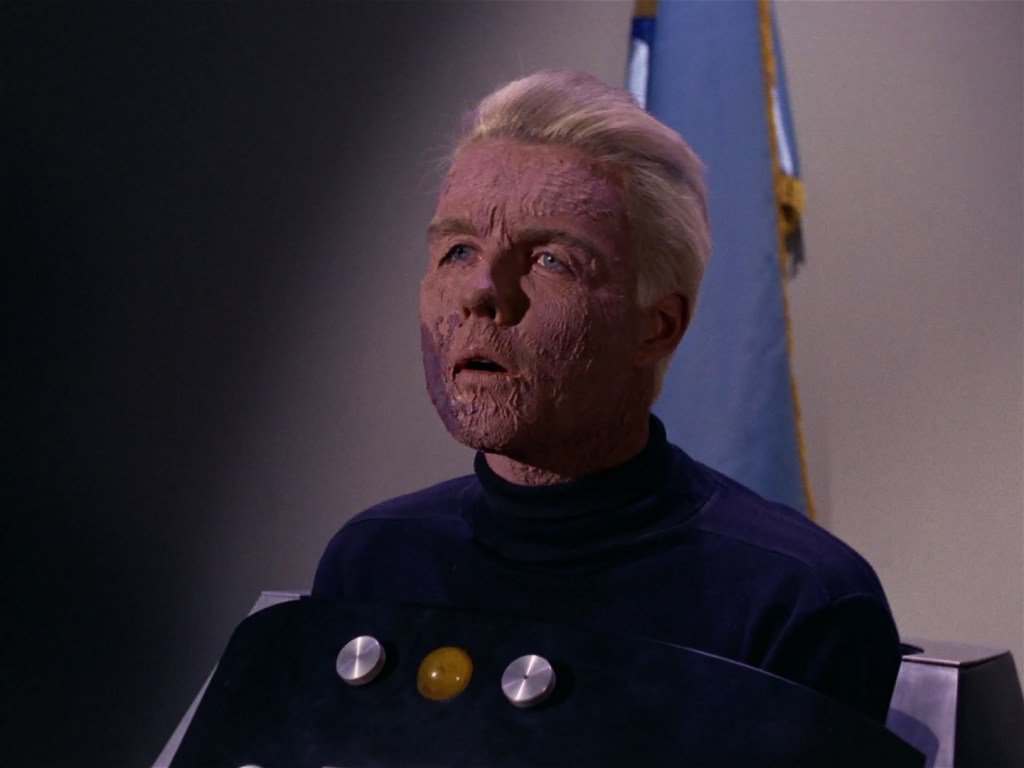
Roddenberry cleverly dispenses with any extras and most of the regular cast by having the court martial session be private for security reasons. We still get Malachi Throne’s Mendez, and Throne provides some new dialogue for the Keeper. 5/5
World-building
Does it contribute positively to the Trek Universe?
Yes, I don’t think I have anything new to say here. 5/5
Is it consistent with the rest of canon?
Yes. 5/5
Is there something new and unique?
The Keeper tells Kirk that “Captain Pike is welcome to spend the rest of his life with us, unfettered by his physical body.” I suppose there is the potential that we could visit Talos IV and find Pike and Vina there living happily in their minds. 4/5
Does the science seem plausible?
I wonder about the mechanics of Pike’s new life. I suppose it will all be internal. He’ll believe that he’s free from his chair and that he can speak as he once did, but all of that will be an illusion. It sounds sort of like living in some kind of VR simulation. Presumably, the Talosians will take care of his physical body as much as possible until he passes naturally. 4/5
Production
Production design (sets, props)
I have nothing new to say here. 5/5
Costumes
I have nothing new to say here. 5/5
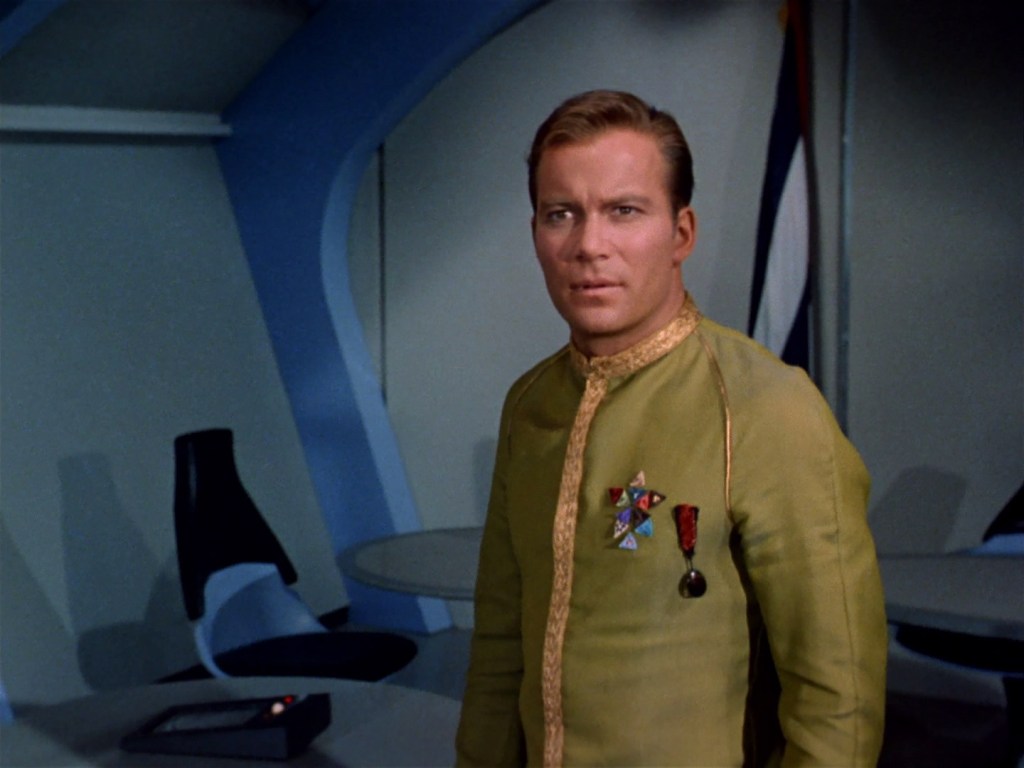
Make-up and Hair
I have nothing new to say here. 5/5
Visual Effects
I didn’t make note of any visual effects here. It’s just what we’ve already seen in “The Cage”. 5/5
Music
The score was written by Alexander Courage. 3/5
Acting (series regulars and guests)
I have nothing new to say here. 5/5
Direction (coherent, memorable)
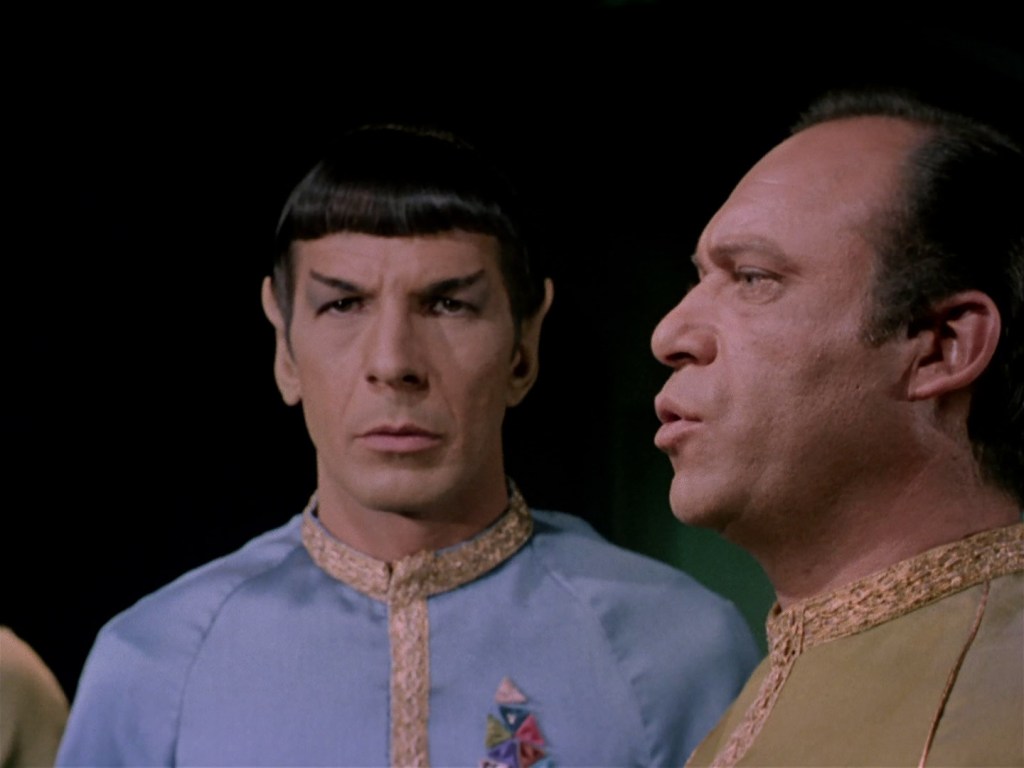
Robert Butler is credited as the director for this episode because it’s mostly footage from “The Cage”. Marc Daniels opens the episode with a really interesting frame of Spock and Mendez. It’s a memorable shot.
Also, perhaps more about the writing than the direction, but they cleverly use Kirk’s captain’s log as a recap of the first episode. 4/4
Philosophy
Is it thought-provoking?
What might it be like to live in a simulation? Some people say we’re living in one now. If that’s so, I have no concept of it. Presumably, Pike would remember that his life is largely an illusion going forward. It seems like that wouldn’t be particularly satisfying to him given how he reacts to the possibility of a life guided by the Talosians in “The Cage”, but he must feel that it’s preferable to the alternative. 4/5
Does it deal with a moral or ethical issue?
The same questions arise for me around disability and the treatment of those living with disabilities. “Living with” is the operative phrase. Someone with a disability, even one as extreme as Pike’s, is still living. I guess the question is about their quality of life. As long as the person is able to make the decision on their own, which Pike does, we should respect that decision. 4/5
Is it consistent with Trek’s optimism and Humanism?
This episode sort of undoes what “The Cage” had done. Originally, Pike was not interested in living in Talosian captivity even if it was “pleasant and benevolent”. Now that his physical circumstances have changed, he’s changed his mind. Personal agency feels very much like a Roddenberry Humanist value. I also like the idea that we can change our minds and that’s OK. People do grow and change. 4/5
IDEA (Inclusion, Diversity, Equity, Accessibility)
I have nothing new to say here. 3/5
Conclusion
My ratings for this episode total 89/100, slightly higher than Part I.


One comment