
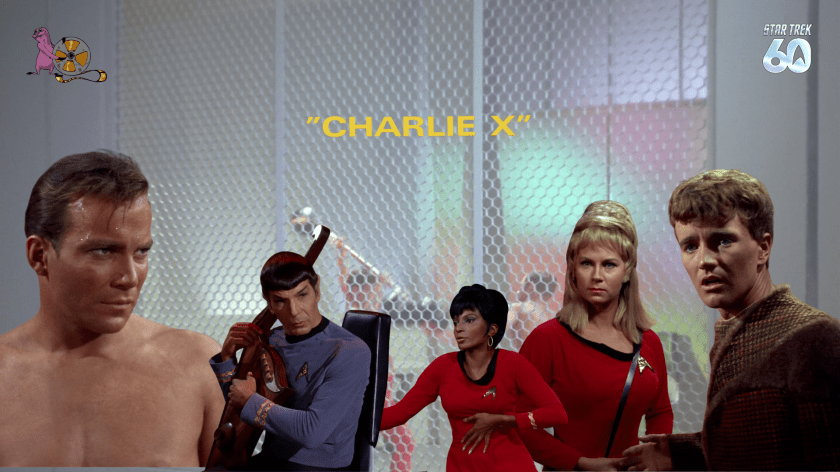
“If I had the whole universe, I’d give it you.”
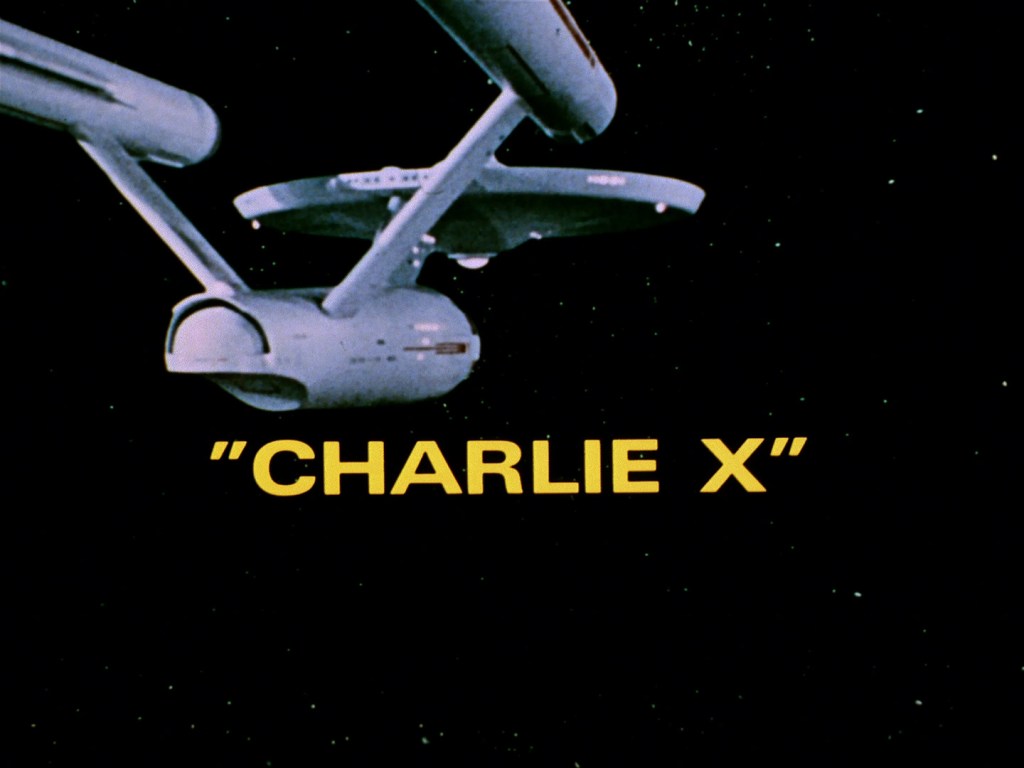
Tonight I watched “Charlie X”. This was the eighth episode produced, but the second to be released. It was written by DC Fontana from a story by Gene Roddenberry and it first aired on September 15, 1966.
Story
Is it a coherent story?
The setup of a teenaged boy who survived a ship crash at the age of three and survived alone for the next 14 years is intriguing enough, but what happens next is quite engaging. The story is very coherent and easy to follow. 5/5
Is it enjoyable to watch?
I always think this episode should really be entitled “The Tragedy of Charlie X”. It’s Shakespearean in tone. Though I find the ending profoundly sad, it is an entertaining episode to watch. 4/5
Is the dialogue strong and/or memorable?
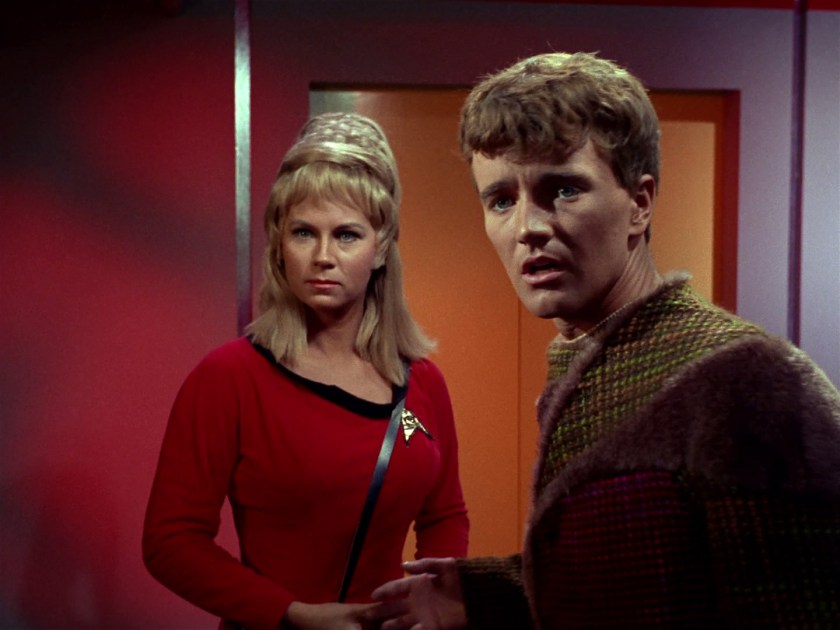
Yes, DC Fontana’s dialogue is excellent ! There are so many memorable lines in this episode. The scenes between Charlie and Kirk are particularly strong, especially the scene in Kirk’s quarters when he tries to explain that there are things one can and cannot have. Some of the conversation between Charlie and Janice is heartbreaking. He tells her, “If I had the whole universe, I’d give it you.” There’s also, “When I see you I feel like I’m hungry all over” which is such an excellent description for what a hormonal teenager can feel. Fontana was one of the strongest writers TOS had. 5/5
Does it serve the main cast well?
Kirk and Spock are especially well served by this episode. We spend a lot of time with Kirk, who once again has the opportunity to display how much he cares about his ship and crew. It supersedes any awkwardness he feels in having to deal with Charlie. McCoy tells Charlie, “Captain Kirk is one of a kind, Charlie.” He’s designed to be very likeable. There’s a brief moment when Kirk tells a crewman that today is Thanksgiving on Earth. The crew will have to eat meatloaf but he wants it to taste like turkey. These little moments are amusing but also telling about how Kirk considers little details to help his crew.
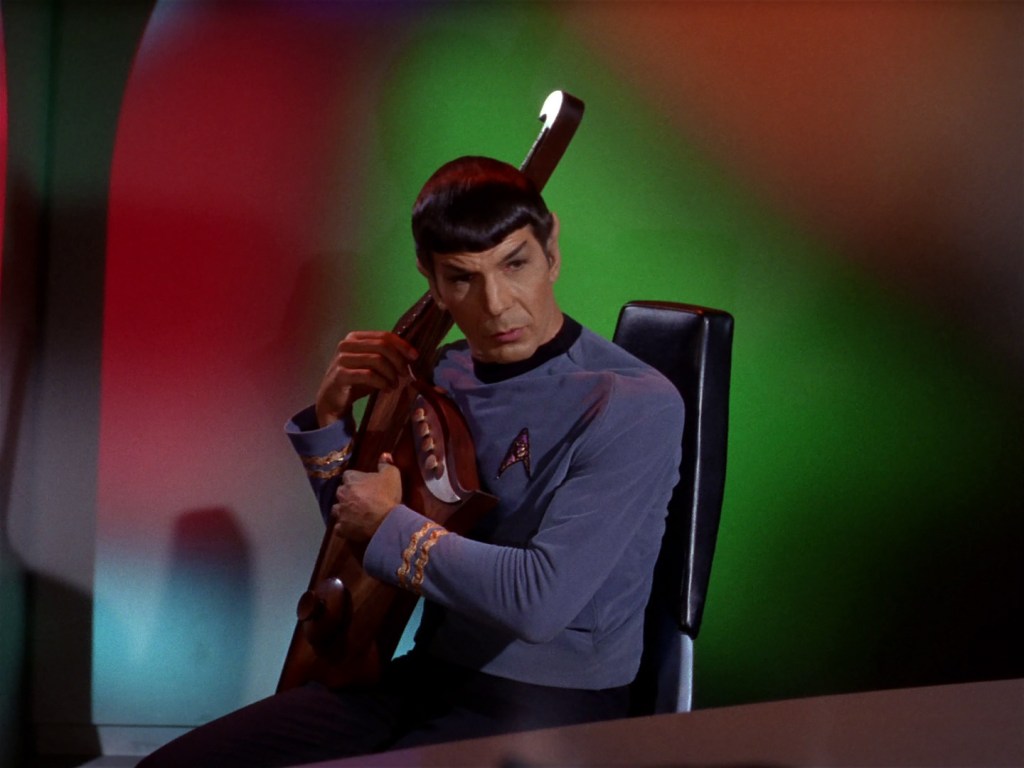
We see Spock and Kirk playing tridimensional chess, and Kirk beating Spock. Spock has little patience for Charlie’s tantrums but he remains his cool, and collected self. There is a recreation room scene in which Spock plays his Vulcan lyre for the first time, accompanying Uhura singing. This scene continues the flirtation we saw between the two in “The Man Trap”. Spock has a bemused look on his face as Uhura teases him with these terrific lyrics:
Oh, on the starship Enterprise
There’s someone who’s in Satan’s guise,
Whose devil ears and devil eyes
Could rip your heart from you!
At first his look could hypnotize,
And then his touch would barbarize.
His alien love could victimize
And rip your heart from you!
And that’s why female astronauts
Oh, very female astronauts
Wait terrified and overwrought
To find what he will do.
Oh, girls in space, be wary,
Be wary, be wary!
Girls in space, be wary!
We know not what he’ll do.
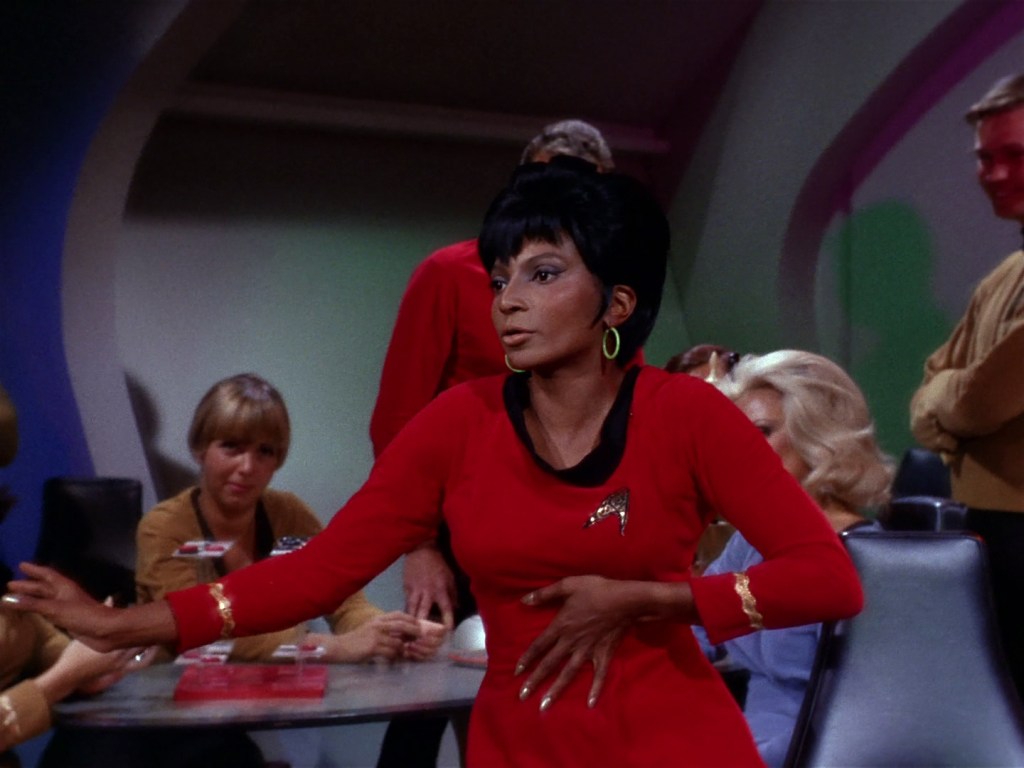
These lyrics were apparently written by Roddenberry. He knew early on that women would be intrigued by Spock (Who isn’t?). Roddenberry also has his only Trek cameo in this episode. He is the voice of the crewman who tells Kirk that real turkeys have suddenly appeared in the galley.
There’s a bridge scene where we see the beginings of a McCoy-Spock verbal sparring match when they’re talking about the legends of the Thasians and how Charlie might have survived. This “frenemy” relationship would, of course, continue to develop over the course of the series. 5/5
If there are guest or recurring characters, are they memorable or interesting?
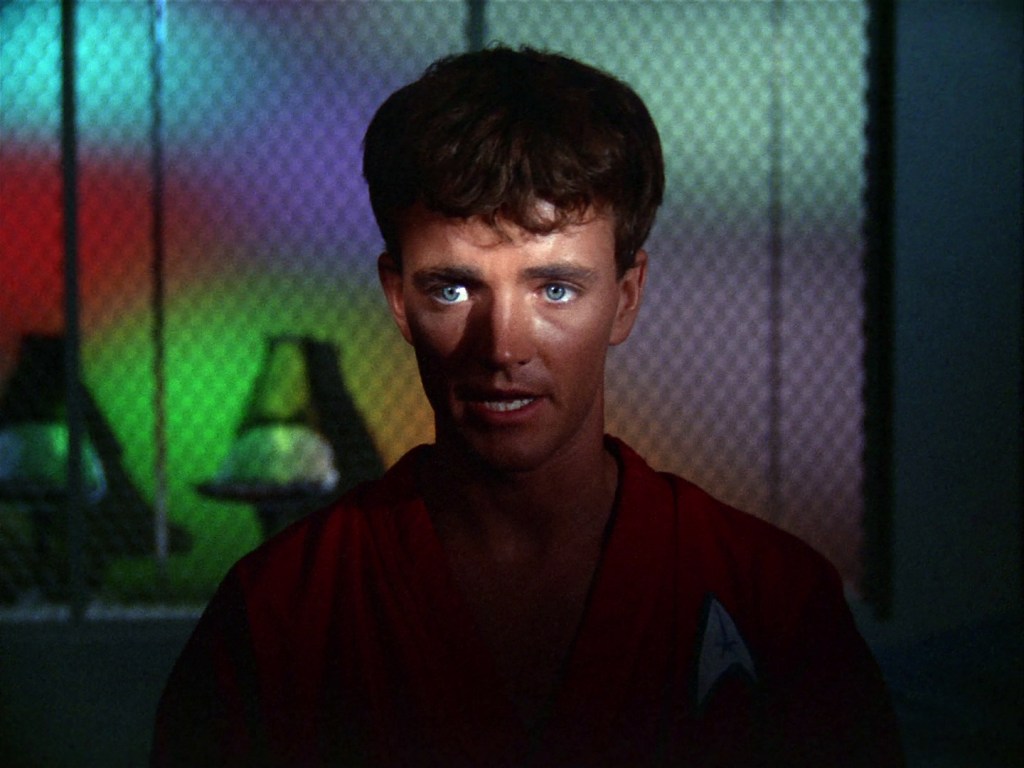
At age 26, Robert Walker is very obviously not 17, but we suspend our disbelief. His performance is uneven for me. There are moments of real genius, but other times when it’s a bit over the top. I imagine it was a challenging role to play – trying to cast himself back to teenagerhood and imagine a life lived in solitude up to this point. Charlie is certainly memorable. 4/5
World-building
Does it contribute positively to the Trek Universe?
This episode helps to develop the tapestry of the Trek universe by introducing us to a survey ship called the USS Antares. This vessel has a crew of 20 and the two crewmen we meet are wearing pilot-style uniforms. That, and the fact that Kirk is offering them supplies and entertainment tapes, suggests that these survey vessels might be the “poor cousins” of the fleet.
In his Captain’s Log, Kirk mentions UESPA (United Earth Space Probe Agency). This agency is part of Starfleet and seems to have authority over the Enterprise and its mission in these early episodes. The Enterprise plans to drop Charlie off at Earth Colony V, which suggests there are colonies of Humans throughout the galaxy. 4/5
Is it consistent with the rest of canon?
We’re still building canon at this point. Charlie mentions “subspace chatter” – subspace communications will become a common part of the universe. 3/5
Is there something new and unique?
The planet Thasus and its legendary inhabitants, the Thasians, are introduced. Apparently, what is known of them is that they are an extinct race but rumours persist that some of them survive in some form. We discover this to be true when we meet a Thasian who appears as an ethereal floating, green head, perhaps prefiguring the Kryptonian council in Donner’s Superman. Thasians have the ability to transmute matter, and make things invisible. They’re also capable of spaceflight and of bestowing their powers on others. This is how Charlie has survived. The Thasians realized that a three year-old Human wouldn’t survive on his own, so they gave him their abilities to allow him to survive.
There’s a great briefing room scene with Kirk, Spock, and McCoy discussing the conundrum in which they find themselves. I love a briefing room scene! 4/5
Does the science seem plausible?
This is debatable. We’ve already seen telepathy in both “The Cage” and “The Man Trap” so it’s established that this is possible in the Trek universe. When Charlie destroys the Antares, he does so from a distance of many lightyears away. It seems like quite a feat to be able to project one’s thoughts such a distance, but we accept it in the context of the story.
At one point, Charlie has control of the Enterprise and Kirk decides to try to overwhelm Charlie by turning on every computer, every light, every function on the ship. There are a few silly moments when Spock and McCoy rush from station to station on the bridge, pretending to flip a lot of switches. First, I’m not convinced this idea would work. Charlie only needs to control the engines and communications systems to get what he wants. Second, it’s just very cheesy to watch. 2/3
Production
Production design (sets, props)
We see one of the Jeffries tubes for the first time in this episode. It’s an iconic bit of design that the series will get a lot of great visuals and action from over the years.
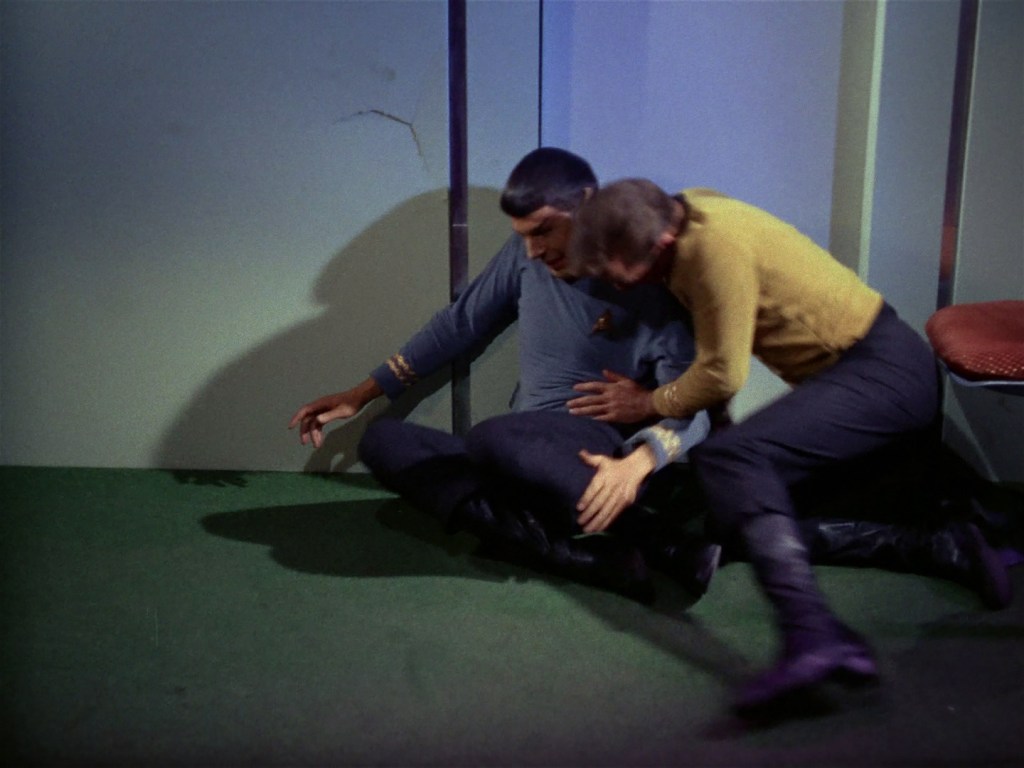
In the scene where Kirk and Spock rush to Janice Rand’s quarters to help her with Charlie, Charlie throughs them against the wall and Spock actually makes a hole in the set with his boots. It’s visible only from the widest angle.
Where we saw Pike in “The Cage” with a clipboard and paper, Kirk now has a PADD and stylus which feels much more in line with the rest of the designs of props on the ship.
This is also the first time we see a tridimensional chess set on screen (though it was filmed in earlier-produced episodes that aired later). In this scene we can also see circular playing cards, and a Space Checkers board – all three recreational props will be used throughout the series. 4/5
Costumes
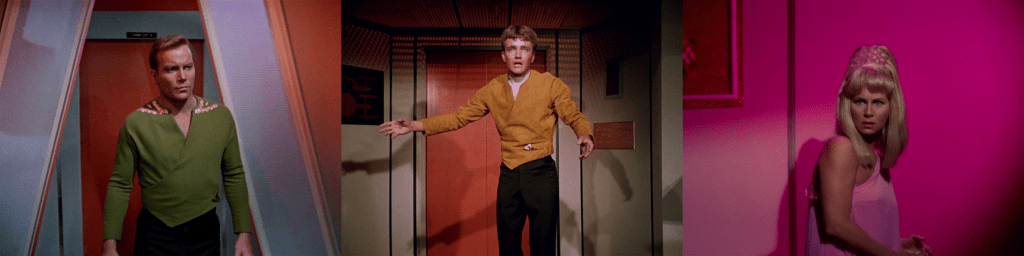
I already mentioned that the Antares officers are wearing pilot-style uniforms. Charlie also has one of these tunics, but without any kind of emblem on the chest. However, he later wears a suede wrap-style tunic that does have an Enterprise delta. Charlie also gets a red karate gi-esque costume for the gymnasium scene.
We see the first appearance here of Kirk’s green wraparound uniform tunic which looks great. We also see him in some spandex tights in the gym which are a bit less great.
The other memorable costume in this episode is Rand’s pink nightgown. There is another woman crewmember wearing uniform pants in this episode. 5/5
Make-up and Hair
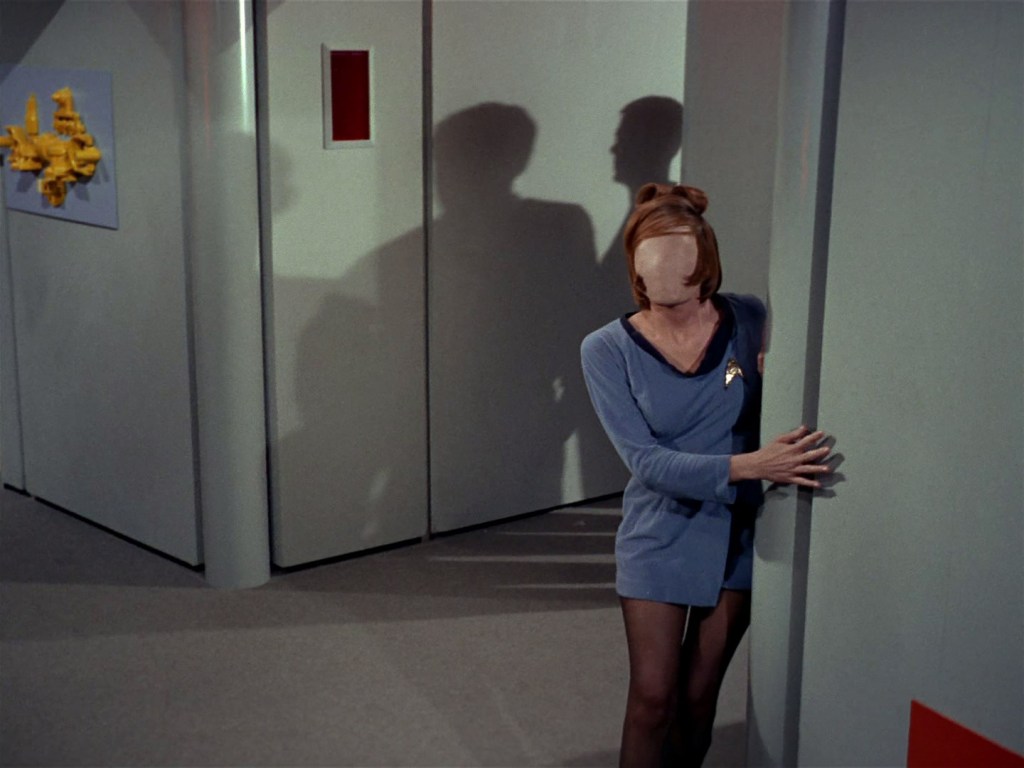
Rand’s wig must have been a nightmare to manage. In this episode, she wears it sort of formally and also let down. What’s most memorable about this episode in terms of make-up is when Charlie, upset that crewmembers are laughing, removes the facial features of a woman. This image has haunted me since I first saw it as a child. It’s incredibly potent. 3/5
Visual Effects
The most memorable visual effects in this episode are when Charlie makes a crewmember called Sam disappear in the gym after Sam laughs at Charlie, and when the Thasian appears as a floating head. Neither of these are particularly stellar. In the remastered version, we see the Antares alongside the Enterprise in the opening shot of the episode. I really enjoy that. 3/5
Music
The score for this episode was written by Fred Steiner. Steiner was the most prolific composer for TOS and he’s definitely my favourite. All of the most memorable themes you think of were created by him. I think the music is a highlight of this episode. There’s one moment in particular when Tina Lawton is transformed into a lizard by Charlie, and Steiner employs some kind of rattle. It’s fun and I always remember it. 5/5
Acting (series regulars and guests)
I already mentioned Robert Walker’s uneven, but memorable, performance. Shatner, Nimoy, and Kelley are strong in this episode. Nichelle Nichols gets to sing, and do a little stunt in this episode and she handles both well. Grace Lee Whitney does a good job as Rand. DC Fontana gives her some believable dialogue. 4/5
Direction (coherent, memorable)
This episode was directed by Lawrence Dobkin. It’s the only episode he directed so I would guess that it wasn’t the most positive experience, either for him or for production. Interestingly, 25 years later, Dobkin would appear on screen as Ambassador Kell in the Star Trek: TNG episode “The Mind’s Eye”. I think he’s the only director who made that transition on Trek (there are several actors-turned-directors though). I think the episode is fine. The camera is generally where it needs to be to tell the story, but there aren’t any particularly memorable shots.
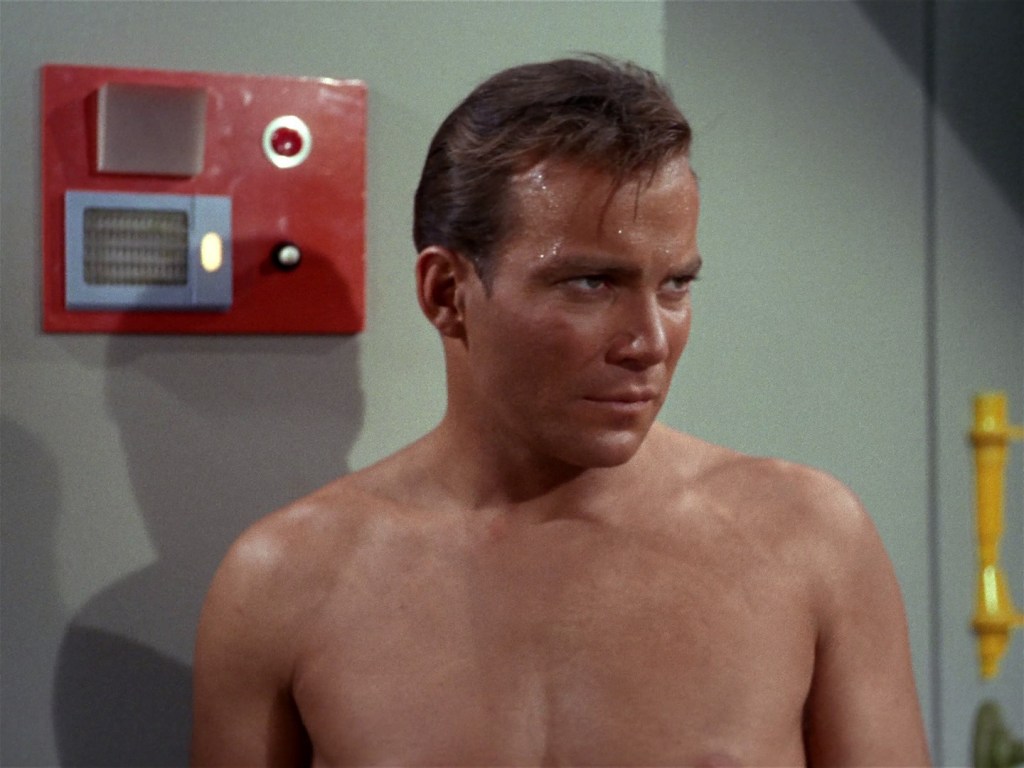
Perhaps the most unique shots are towards the end of the gym sequence. There are close-ups of both Shatner and Walker that have great eye lights. 3/5
Philosophy
Is it thought-provoking?
Yes, I mentioned that I find the end of this episode quite tragic. It’s hard not to empathize with Charlie; a boy who basically raised himself from the age of three after his parents died in a crash. He was kept alive by the Thasians but we don’t get the sense that they did much more for him. When the Thasians arrive to take Charlie back, Charlie screams “I can’t even touch them!” The Thasians are non-corporeal, so Charlie is being condemned to a life of solitude amongst these shadowy beings. I find it heartbreaking. 4/5
Does it deal with a moral or ethical issue?
The moral issue here is that Kirk and crew know that Charlie really belongs amongst other Humans. Kirk wonders whether Charlie can be taught to exist in Human society but the Thasians claim that’s not possible. I think Kirk might have intervened, but he knows that Charlie is dangerous. The Thasians have restored Sam and Janice after Charlie caused them to disappear, but they can’t bring back the 20 crewmembers of the Antares. Would Charlie decimate Earth Colony V? We’re left with the question, which is part of why I find this episode so tragic. 4/5
Is it consistent with Trek’s optimism and Humanism?
Initially, I think we’re impressed by Charlie’s resilience. He was able to survive alone, as a boy. He taught himself to read and speak with the aid of computer tapes. He might have been a shining example of a Human, except it’s not long before we realize things are amiss. I don’t think “Charlie X” is optimistic at all. 2/5
IDEA (Inclusion, Diversity, Equity, Accessibility)
This episode is fairly heavy with suggestions of sexual abuse. I mentioned the Jeffries tube above. It’s here that Charlie sees a crewman (the only Black actor in the episode aside from Nichols) slap his mate playfully on the butt. Charlie later mimics this behaviour with Yeoman Rand. She stops him and tells him it’s inappropriate, telling him to ask Kirk or McCoy why. The initial conversation Charlie has with Kirk about it is not particularly helpful. We get the line, “there’s no right way to hit a woman.”
Kirk eventually gets the sentiment correct. He explains to Charlie that he has to be gentle and that relationships are a two-way street, but Charlie doesn’t accept this. It seems clear that Charlie later intends to assault Rand unless Kirk and Spock arrive when they do. I think we’re meant to sympathize with Charlie because of his raging teenaged hormones and lack of socialization, but it’s all a bit too gross to give him much grace.
In terms of gender roles in 1966, I guess this episode is fairly strong. An assault is prevented, and Kirk does dance around the idea of consent when talking to Charlie about relationships. There’s nothing pushing inclusion or belonging forward, though. 2/5
Conclusion
My ratings add up to 76/100. I do like this episode, despite some faults. It’s quintessential TOS. Steiner’s score, the faceless woman, and the tragedy of Charlie all make it quite memorable.


4 comments