
“Another Earth?”
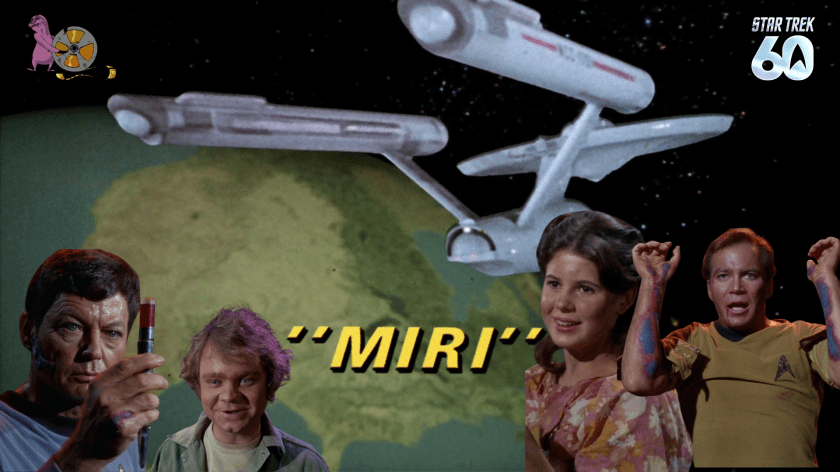
Last night I watched “Miri”, written by Adrian Spies. This was the 12th episode produced, but the 8th to be released. It first aired on October 27, 1966 and has been haunting our nightmares ever since.
Story
Is it a coherent story?
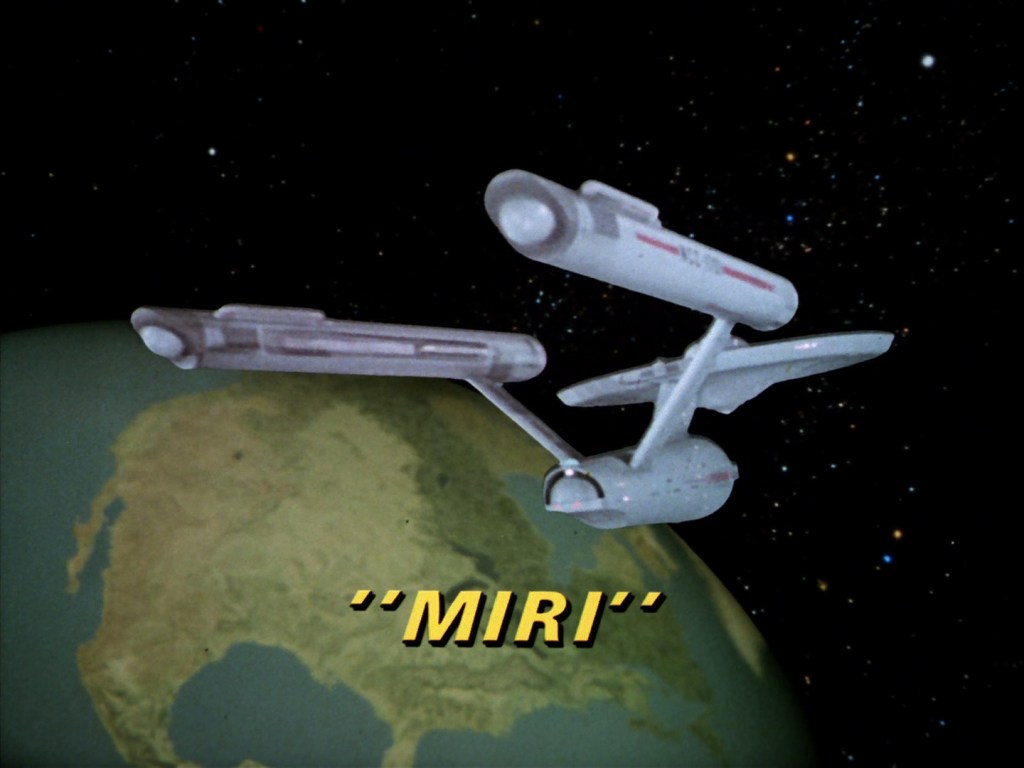
The Enterprise follows a distress call, arriving at an exact duplicate of Earth. They find a city that seems to correlate with 1960s America on our Earth. Though the city initially seems abandoned, they soon discover that a plague has eliminated all adults and left only a ragtag group of children alive. 4/5
Is it enjoyable to watch?
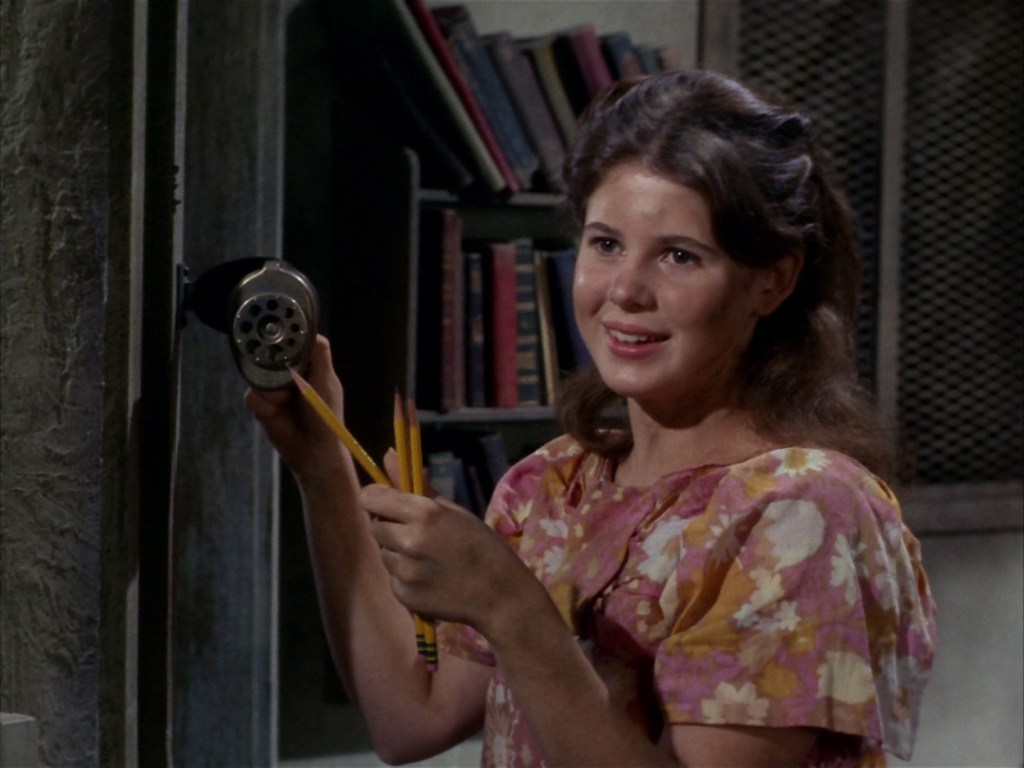
No, I find this episode a huge chore to watch — like sharpening pencils. Given the option, I’ll generally skip it. We’ll get into the various reasons for my dislike of it, but it’s primarily the children, known as Onlies. 2/5
Is the dialogue strong and/or memorable?
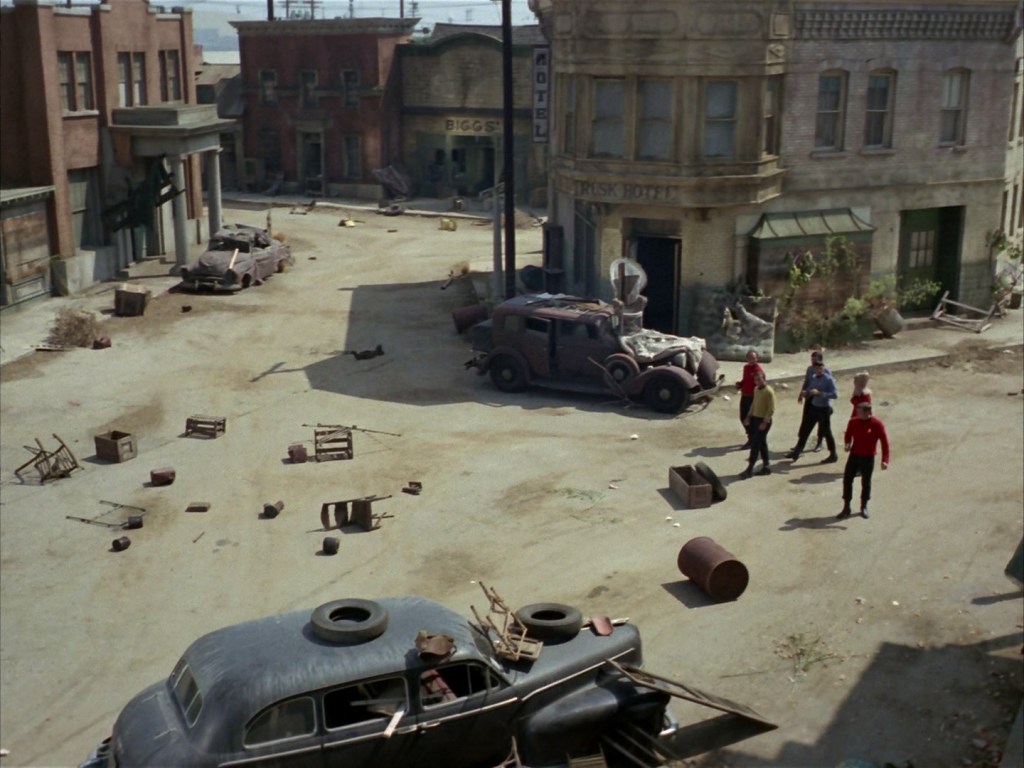
I wouldn’t say the dialogue is strong but it is memorable. For example, when the landing party first beams down to the planet, McCoy exclaims, “Now, this is marvelous. The most horrible conglomeration of antique architecture I’ve ever seen.” He’s referring to the Desilu backlot which was probably most familiar to people from The Andy Griffith Show. It won’t be the last time TOS makes use of it. Aside from one scene in “The Cage”, this is the first time TOS shot outdoors.
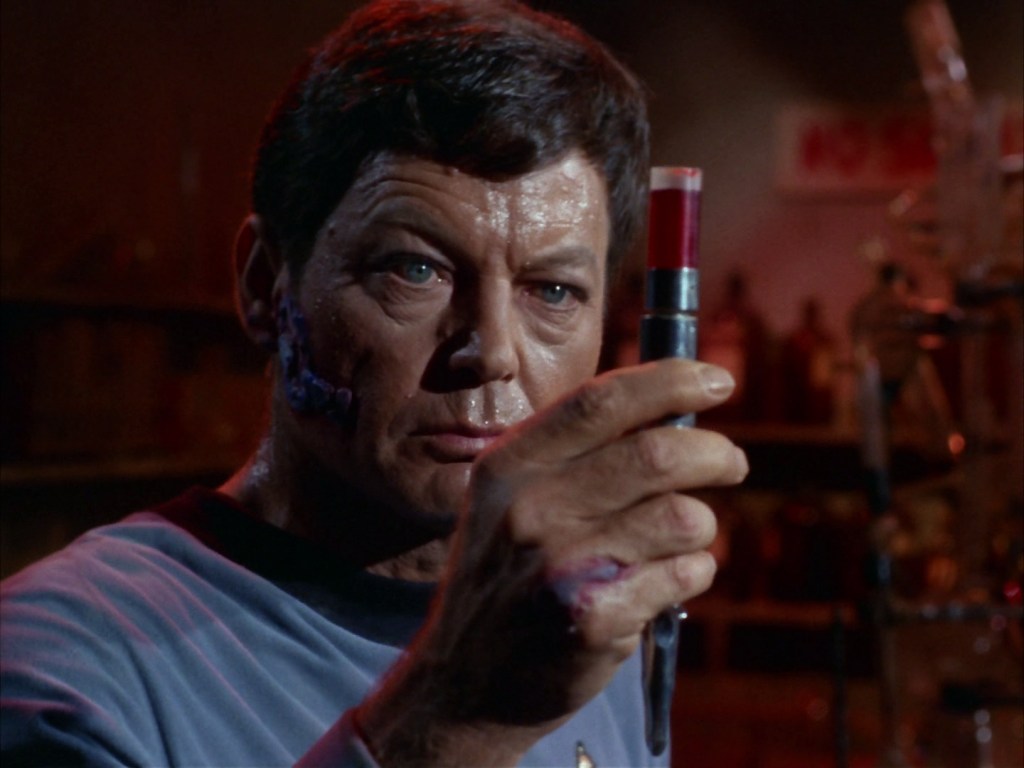
Later, when McCoy and Spock have created something that might be a vaccine but can’t test it without access to the Enterprise computers, Spock says the ridiculous line, “Without them, it could be a beaker full of death.” I have often referred jokingly to this episode as a beaker full of death.
We also get the various bizarre phrases of the Onlies, including such classics as, “Bonk! Bonk! On the head! Bonk! Bonk!” and “Blah! Blah! Blah!” to which Kirk replies, “No blah! Blah! Blah!” Finally, there’s the seemingly never-ending chanting of “Nyah nyah nyah-nyah nyah!” 4/5
Does it serve the main cast well?
I don’t think so. Kirk comes across as extremely creepy to me in this episode. Sure, the 60s were a simpler time, and I’m fairly jaded, but his behaviour with Miri reads as really inappropriate to me.
When they meet her, Miri is just about to enter puberty when she’ll become vulnerable to the plague that kills all grups (grown-ups). She develops a bit of a crush on Kirk and he does nothing to discourage it. There’s an early scene where she tells him her name and Kirk says, “Miri. Pretty name for a pretty young woman.” Miri replies, “Pretty?” and Kirk says, “Very pretty.” There are two occasions when he touches her face in a very intimate way. He later asks if she wants to go someplace with him and then holds her hand as they walk away. It’s all just very uncomfortable.
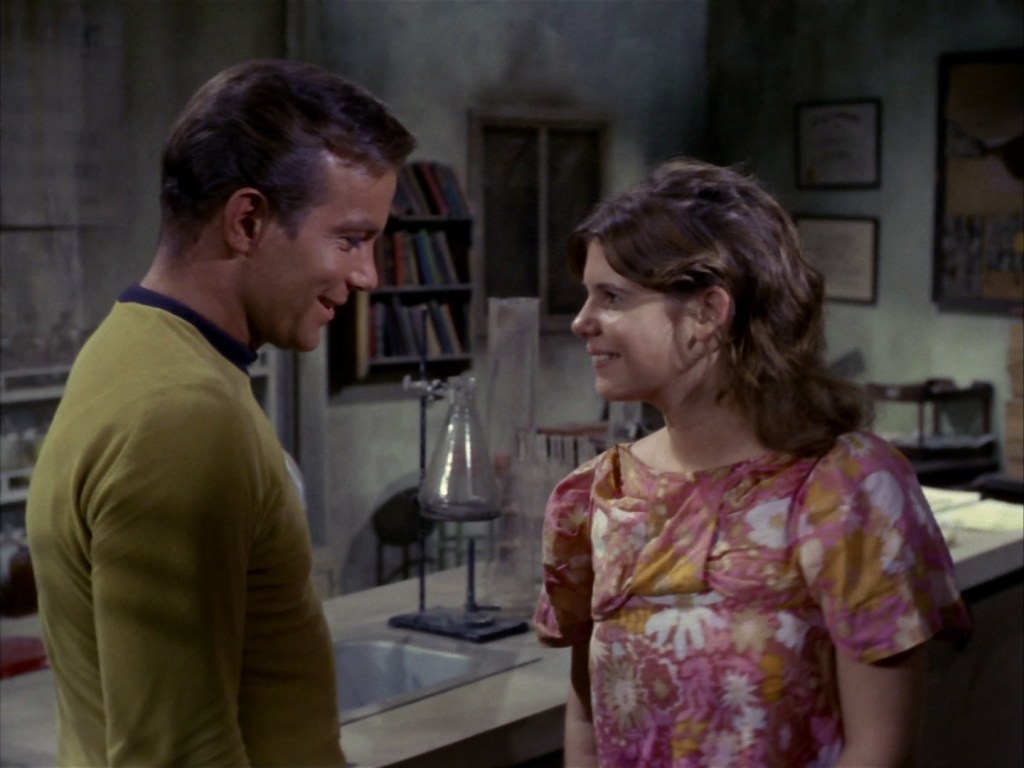
I suppose McCoy and Spock come out of it pretty well. McCoy is demonstrated to be a clever scientist and self-sacrificing when he tests what might be a beaker full of death on himself. 2/5
If there are guest or recurring characters, are they memorable or interesting?
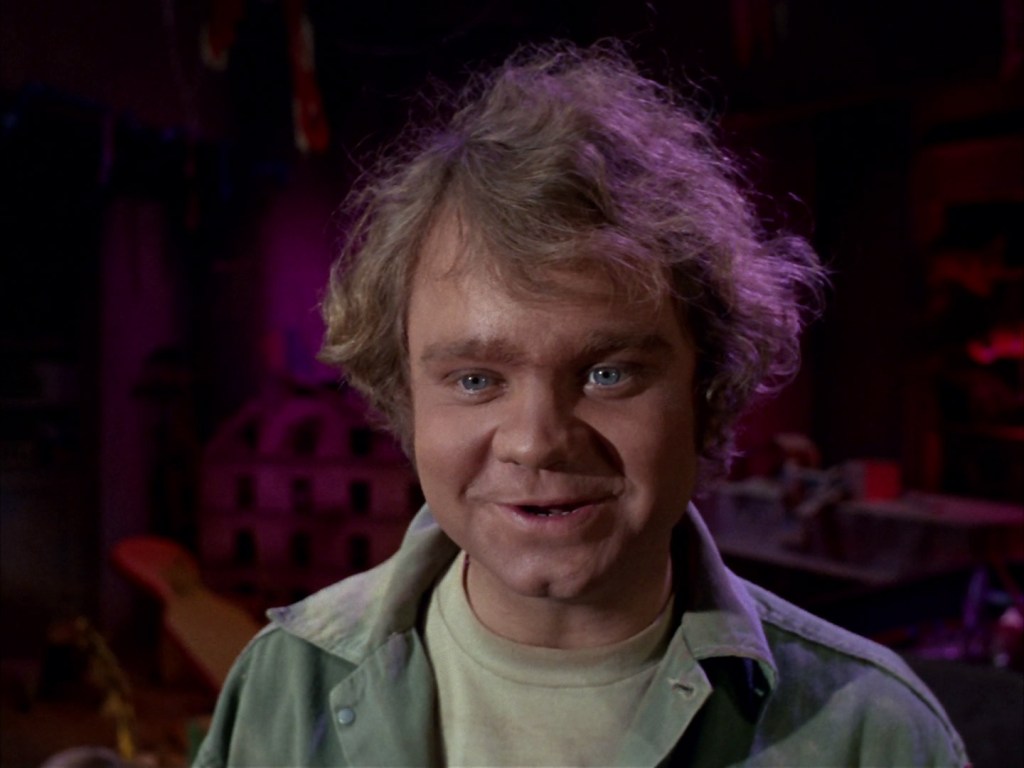
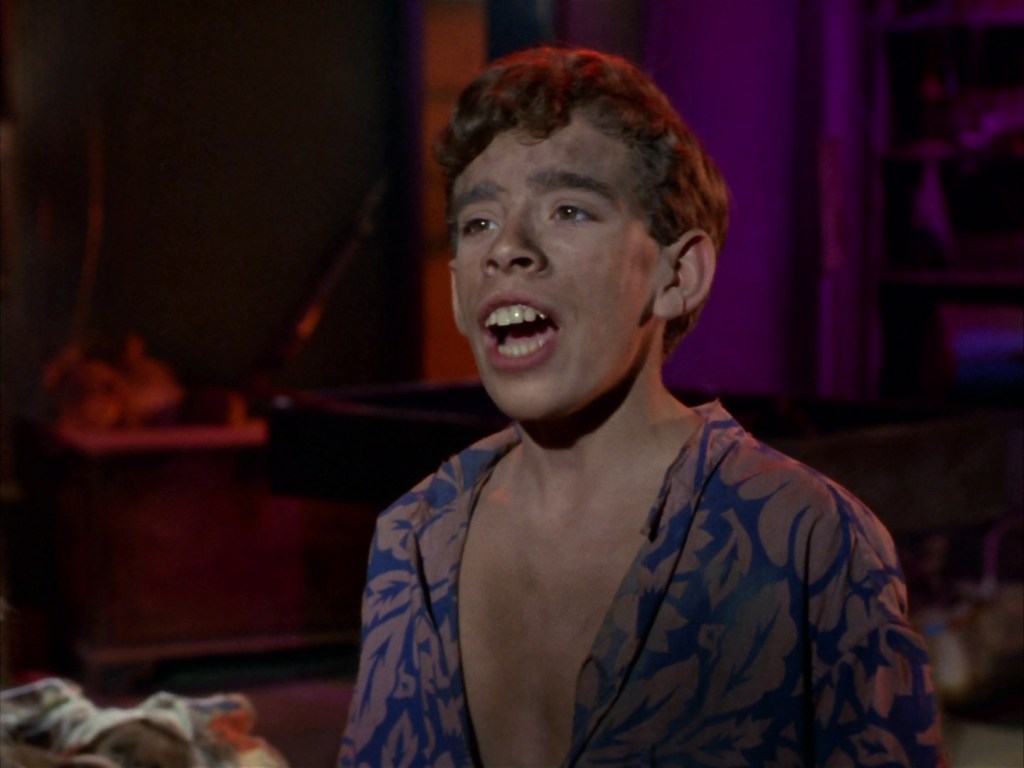
Kim Darby is very sweet as Miri but she doesn’t get much to do. Mainly she obeys Kirk as he asks her to clean off desks and sharpen pencils to distract her. Michael J. Pollard as Jahn is creepy as all get out. He was nearly 30, playing a child who had not yet reached puberty. I suppose they couldn’t find a child actor strong enough for the role, or the amount of time children are permitted to be on set wasn’t going to be enough for them to make the shooting schedule work.
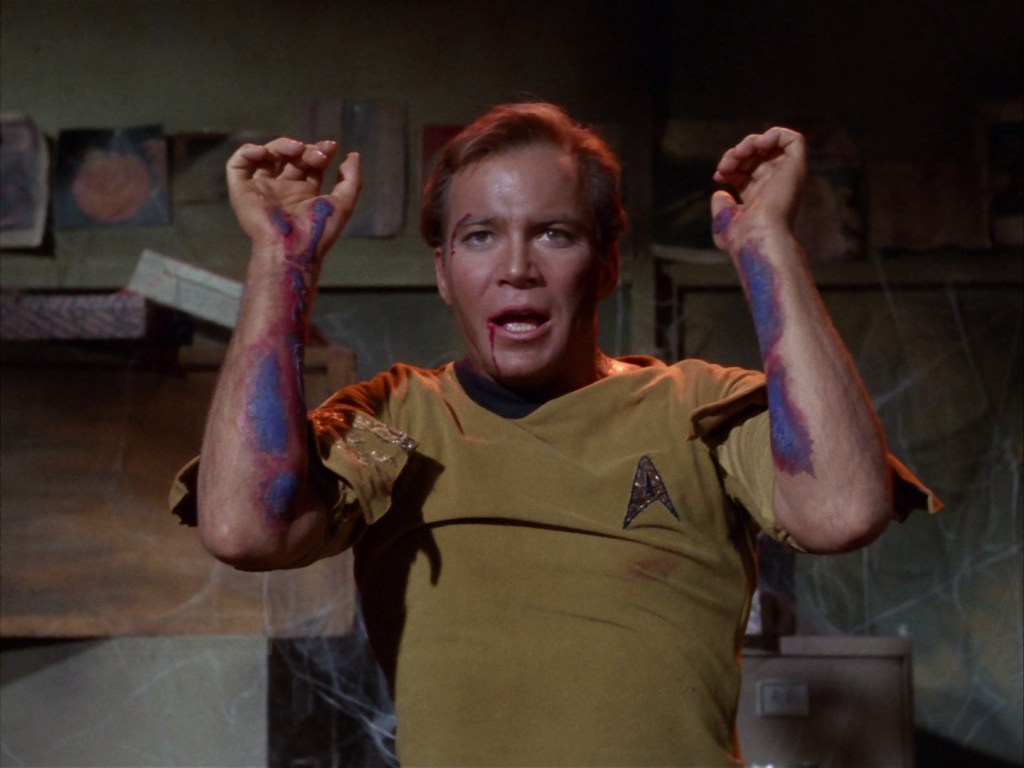
Grace Lee Whitney does well as Yeoman Rand. This episode continues the “will they, won’t they?” sexual tension between Rand and Kirk. It seems that the plague starts to turn adults mad and at one point, Rand has a bit of a breakdown. She tells Kirk that she used to try to get him to look at her legs (now her legs have the tell tale lesions of the plague). Kirk hugs Rand and Miri sees this, becoming jealous. 3/5
World-building
Does it contribute positively to the Trek Universe?
I don’t think so. Nothing stands out to me. 1/5
Is it consistent with the rest of canon?
Yes. The only anachronism I can think of is that, at the end of the episode, Kirk says he’s contacted “Space Central” to send teachers and advisors to help the cured Onlies. This would later evolve into Starfleet Command. 4/5
Is there something new and unique?
Perhaps what’s most unique is the notion that another planet, in a distant solar system, would be an exact replica of Earth. The odds against something like this happening must be truly astronomical. Of course, the production reason for this is so that they could use the Desilu backlot and not be called out for it not looking alien. In later episodes, we learn about something called Hodgkin’s Law of Parallel Planetary Development which says that planets of similar size, with similar atmospheres, etc. will tend to evolve similar biological life forms and even sociological and cultural developments. I suppose this might be considered the first example of that law in action. We suspend disbelief because it allows us to have the stories the crew could reasonably produce, but it’s a pretty goofy idea. 4/5
Does the science seem plausible?
The inhabitants of Miri’s world were engaged in a Life Prolongation Project. They created a virus that infected the entire populace. They succeeded in that they were able to prolong lives; inhabitants now age only about one month in a hundred years. However, they failed because when an infected person reaches puberty they suddenly start to go mad and age a century in a very short time. I think I can buy this. There’s some kind of hormonal changes at puberty that trigger a change in the virus.
The problem is that our Starfleet heroes keep saying they’re working on a vaccine when what they’re really working on is a cure. The distinction probably mostly goes unnoticed but the COVID-19 pandemic has made us much more familiar with the terminology.
The piece about this plague that I struggle to believe is that infected children who live to be over 300 years old never grow out of their childhood mentality. Surely, even without adults to guide them, some of them would teach themselves to read and become more mature, critical thinkers over the space of 300 years. 3/5
Production
Production design (sets, props)
Backlots are much maligned because they tend to be easily recognizable from production to production but I love them! They’re an amazing part of old school Hollywood magic that enable hundreds of productions a year to work in a relatively controlled environment. The interior sets we see are very 1966, as is the set dressing.
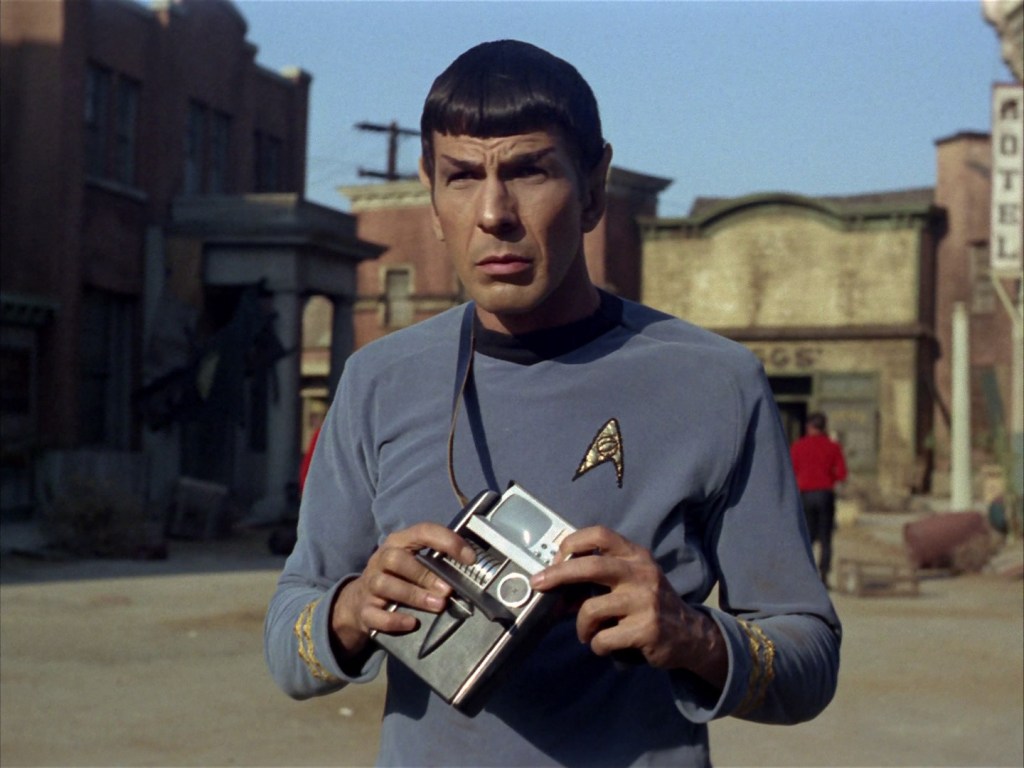
The tricorder gets a lot of screen time in this episode. We see Spock using it to scan the vicinity and Nimoy cleverly holds it with the screen facing the camera. This isn’t practical in-universe but it’s great for getting production value on the screen and for giving Trekkies a good, clear view of it so they can create their own replicas. We also see Kirk recording his captain’s log into the tricorder.
Something we’re seeing for the first time is McCoy’s portable bio-computer which is beamed down. Even with this, the officers need their communicators to access help from the Enterprise. They hadn’t yet envisioned that the computer might be able to function or connect to the ship’s computer remotely. 4/5
Costumes
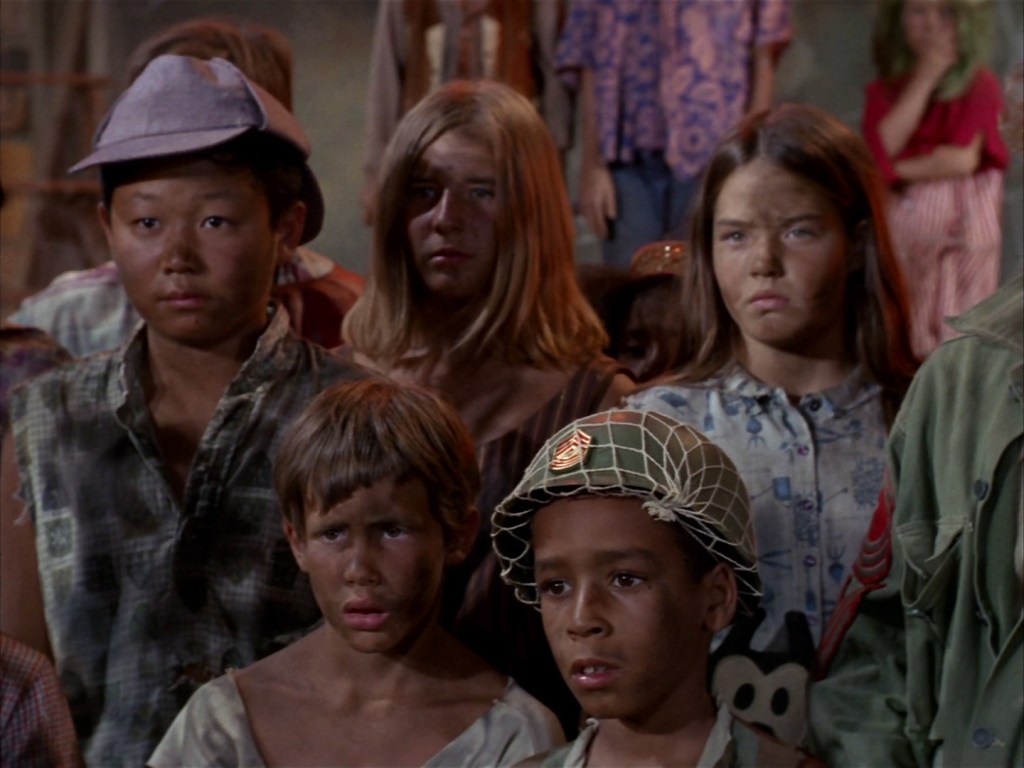
The costumes for the Onlies look like production raided a Value Village at Halloween. One child has a terrifying mask. The clothes are all a hodge podge of tattered looks (which is how the script described them).
The longer our Starfleet team is on the surface, the rougher their uniforms get. Kirk and McCoy both choose to partially open the zippers at their collars. I guess it’s an attempt to get some air and look less put together, but when I first noticed it I thought it was an error. When Rand becomes infected and has the intimate conversation with Kirk, she sort of tears her uniform and the zipper under her collar becomes visible as well. 3/5
Make-up and Hair
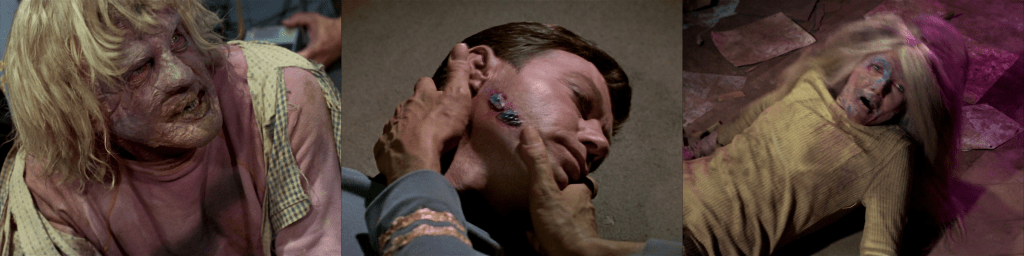
The plague lesions are quite effective. After McCoy takes the cure, the lesions on his face fade in an old school wolf-man type effect. They have Spock (probably a double) hold McCoy’s head still so the fading transition is pretty seamless. The full-blown plague make-ups are kind of zombie-like. They’re definitely gross and scary. 4/5
Visual Effects
There aren’t a lot of visual effects in this episode. There’s the fading lesions mentioned above, and some phaser blasts, including one that disintegrates an attacking plague victim. I prefer watching the remastered version of this episode because the Earth look-a-like planet is beautiful. There are some nice shots of the Enterprise orbiting a planet with very familiar continents. 3/5
Music
Alexander Courage wrote the music for this episode. The only time I really noticed it was when he used the main title theme as Kirk enters through a door. It makes it seem like Kirk is synonymous with the Enterprise which is a neat idea. 3/5
Acting (series regulars and guests)
The regulars are all fine in this episode. Kim Darby does a good job with what she’s given. Michael J. Pollard has the impossible task of trying to act like an adolescent when he’s in his late 20s. He’s incredibly distracting. In fact, most of the Onlies are incredibly distracting. Some of the kids are family members of the production. William Shatner’s and Gene Roddenberry’s daughters are in the crowd. Director Vincent McEveety’s son is the child I mentioned with the hideous mask.
The one that really haunts me is John Megna as “Jahn’s Friend”. This poor child has some very unfortunate dentition, and he’s given the most annoying lines to yell. My favourite part of this episode is when Shatner pulls him off a desk at one point. 2/5
Direction (coherent, memorable)
This episode was directed by Vincent McEveety. He’s the first Trek director who really has an opportunity to open things up because of the backlot and he does a good job of capturing most of the site. It must have been a nightmare to work with all of those children. I give him kudos simply for surviving the ordeal. 4/5
Philosophy
Is it thought-provoking?
Not particularly. The piece that wants to be thought-provoking is whether children have an inherent need for adults (which Kirk says they do). Would all children become the Onlies if left to their own devices for 300 years? I’d like to think they wouldn’t. 2/5
Does it deal with a moral or ethical issue?
The ethical issue is about people messing with their genes in an attempt to prolong life. I suppose McCoy’s cure must stop the extended aging, otherwise this would have become a fountain of youth. The episode seems to take the stance that we should be content with the length of life we have. 3/5
Is it consistent with Trek’s optimism and Humanism?
Insofar as our technology and scientific know-how save the day, this is consistent with Gene’s optimism about our ability to be great. Kirk’s creepy behaviour with Miri gives me pause. 3/5
IDEA (Inclusion, Diversity, Equity, Accessibility)
I didn’t note anything particularly interesting in this area. There are a couple of racialized children amongst the Onlies but they have no lines.
When the “Boy Creature” dies from the plague at the beginning of the episode, McCoy says “it’s dead”. I know one person who uses it/its pronouns but most people would consider that fairly rude. 1/5
Conclusion
My scores for this episode total 60/100 – a tie with “The Enemy Within” – but Enemy is eminently more watchable.


4 comments