
“It’s not really ugly. It’s Human.”
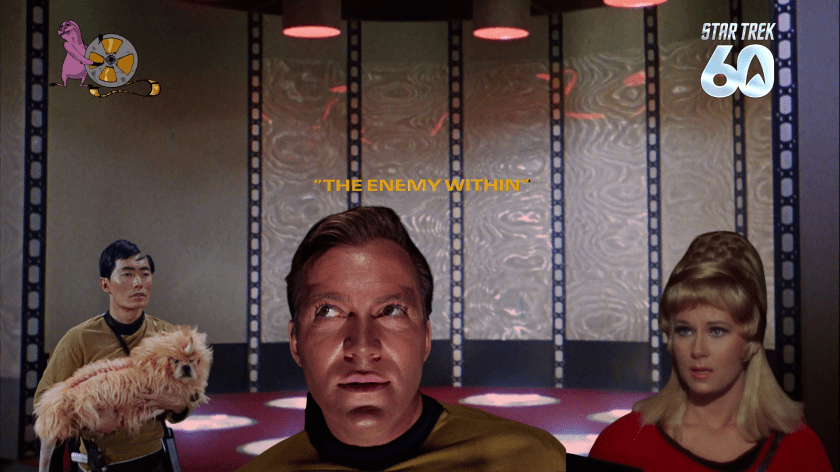
Last night I watched “The Enemy Within”. This was both the fifth episode produced and fifth episode released. It was written by Richard Matheson, of I Am Legend fame. It first aired on October 6, 1966.
Story
Is it a coherent story?
In this episode, a mysterious ore from the planet Alfa 177 causes the Enterprise’s transporter to malfunction. When Kirk beams up from the surface, he is split in two: a good Kirk and an evil Kirk. Chaos ensues.
This episode has some really obvious plot holes which detract from its coherence for me. The first problem is just a production issue; they didn’t yet have a shuttlecraft. It wouldn’t be long before they got one, so anyone watching episodes out of sequence might naturally wonder why Kirk couldn’t just send a shuttlecraft down to Alfa 177 to pick up the stranded crewmembers.
The second problem is inconsistencies with what the transporter is and is not able to do within the episode. The transporter seems to be splitting biological entities into two, both of which are able to function. However, when they try to beam down equipment (heaters), they duplicate and do not function. That doesn’t make a lot of sense to me.
Also, I question that no one puts things together sooner, especially Spock. The pieces of the puzzle seem to add up pretty clearly early on. 3/5
Is it enjoyable to watch?
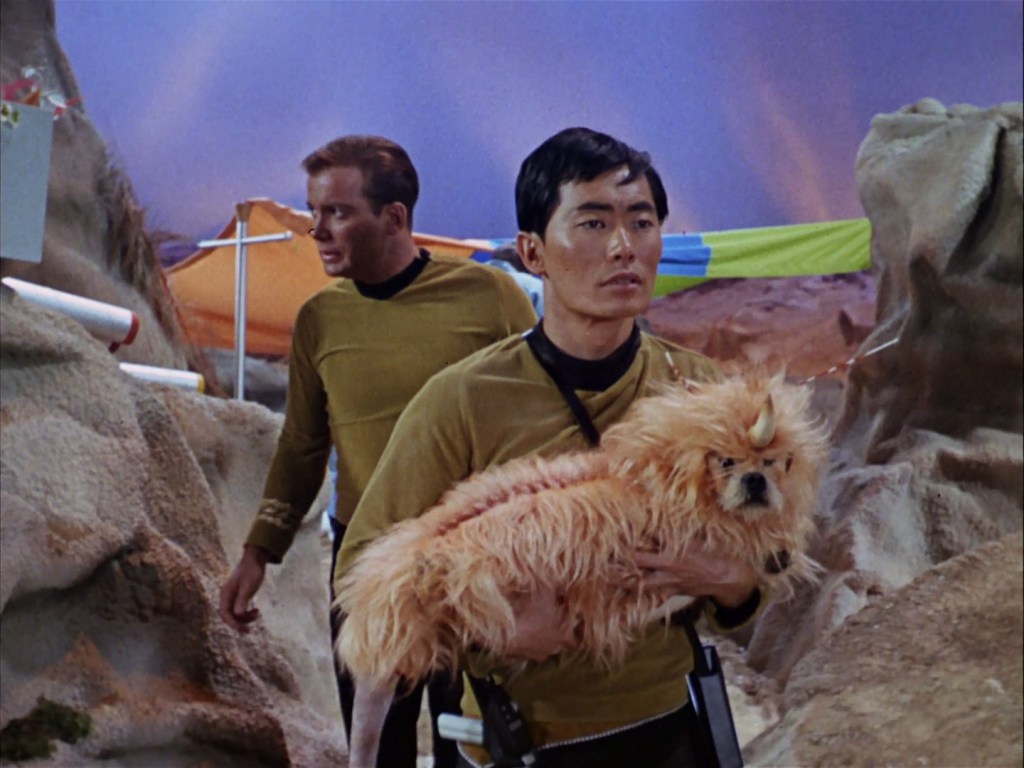
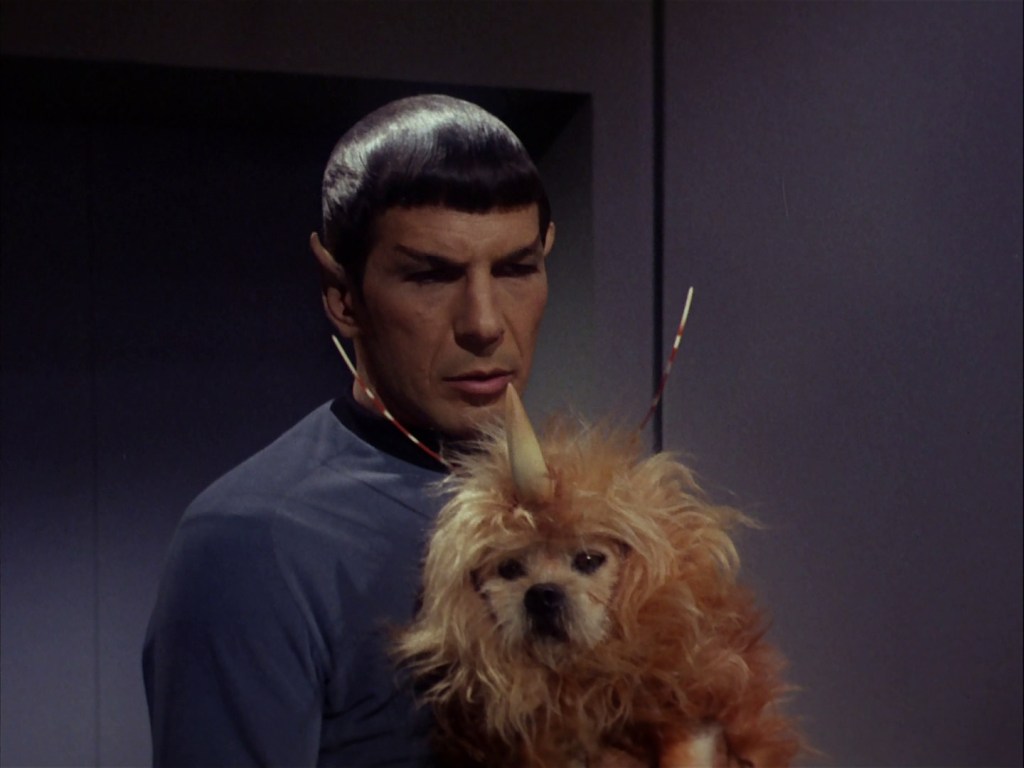
If one is paying attention only at a surface level, this might be enjoyable to watch. It moves at a nice pace and the performances are engaging (if sometimes over the top). What sticks out most to me from this episode is the Alfa 177 canine – really only the second alien we’ve seen after the Salt Vampire in “The Man Trap” because “The Cage” wasn’t aired. 3/5
Is the dialogue strong and/or memorable?
There are a couple of lines that are only memorable because of Shatner’s over the top delivery. For example, the always memorable, “I’m Captain Kirk!” and “I said, give me the brandy!”.
Spock gets the most interesting dialogue in this episode. For example, when Kirk is struggling with his dilemma and Spock is analyzing the problem, Spock says, “If I seem insensitive to what you’re going through, Captain, understand it’s the way I am.” We know that Spock is at least experiencing enough empathy to bring it up as an issue. Later, he says to McCoy, “Being split in two halves is no theory with me, Doctor.” This picks up on the thread we saw explored so well in “The Naked Time”.
Towards the end of the episode, a reintegrated Kirk says “I’ve seen a part of myself no man should ever see” which is what Matheson intends the episode to be about. 4/5
Does it serve the main cast well?
Spock is served well (mostly) because of the memorable dialogue I mentioned above. We’re reminded of his hybrid nature and the fact that he elects to suppress his emotions. However, that’s all undermined for me at the very end of the episode. I’ll come back to this.
Sulu, stranded on the freezing surface of Alfa 177, comes across as brave in the face of possible death.
Kirk barely makes it out of the episode unscathed. If one spends much time thinking about what has happened it makes him quite unlikable. I’ll come back to this as well. When the good Kirk is feeling confused and forgetful, Spock tells Kirk that he shouldn’t let the crew see him as vulnerable. Today, when we’re talking about psychologically safe workplaces and leaders modelling balanced behaviour, this reads as pretty toxic. I understand it from a military (which Starfleet kind of is) perspective, but it doesn’t give much credit to the crew. 3/5
If there are guest or recurring characters, are they memorable or interesting?
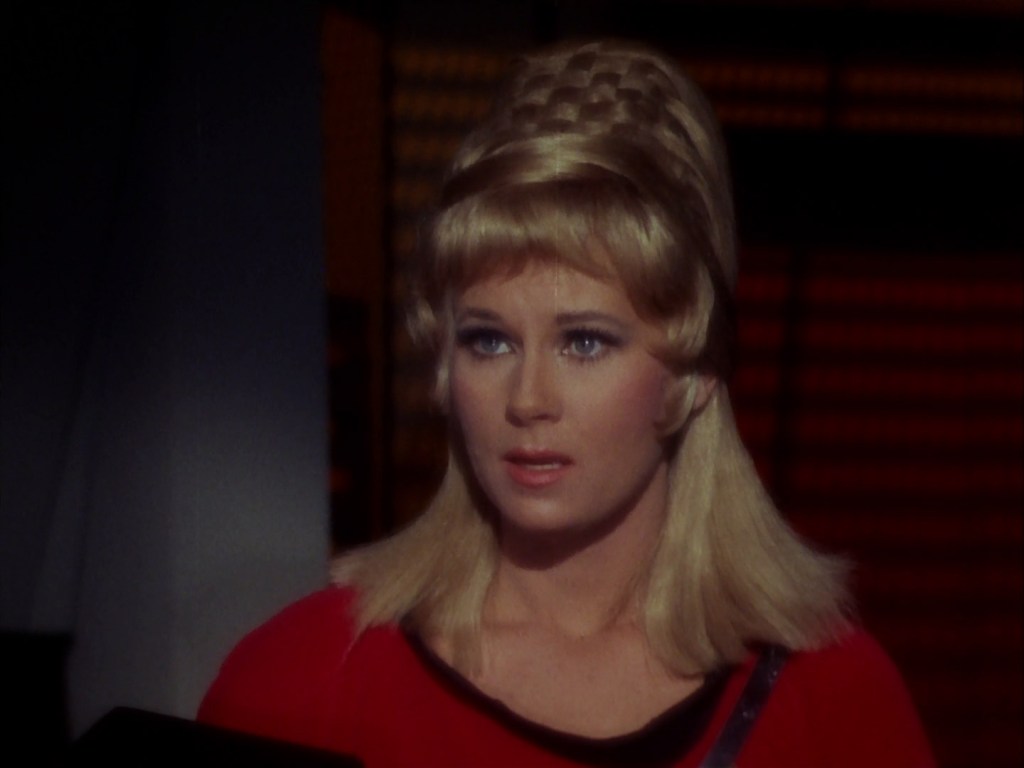
Grace Lee Whitney as Janice Rand is the most notable guest. She’s very memorable in this episode, mostly because of what happens to her rather than how she responds. I don’t think they knew how to write a woman well in a situation of attempted sexual assault. Whitney does well with what she’s given, but I’m not sure the episode does much for her character. 3/5
World-building
Does it contribute positively to the Trek Universe?
Perhaps the major contribution to the Trek universe is the concept of the transporter gone haywire. The transporter is a unique invention that not only looks great on screen, but solves the story problem of getting landing parties to planet surfaces without figuring out how to land a starship. Transporter malfunctions will basically become a trope in Trek. There are dozens of stories that explore how the technology works and the consequences when it fails. 4/5
Is it consistent with the rest of canon?
But for two items, I think this episode is largely ignored by future Trek. We will see other transporter duplicates, but never again a person divided into “positive” and “negative” selves. I think that idea is an oversimplification that has highly problematic implications.
Perhaps the biggest contribution to canon is Spock’s first use of the Vulcan nerve pinch. This becomes pretty synonymous with his character and we’ll see it employed many times in the future. The second is the Alfa 177 canine which we will see again, especially in later animated Trek. 3/5
Is there something new and unique?
The transporter malfunction is new and novel. Some would argue that it later gets over-used, but here it’s new. 5/5
Does the science seem plausible?
To me, the science does not seem at all plausible. I can accept that some kind of alien ore might have a negative effect on the transporter, but I don’t see how it would cause a duplication of a person, or cause a split of that person’s psyche. Or, if it did cause that split, I don’t see why it would always cause the same problem rather than something more random, and this episode suggests it would because both Kirk and the Alfa 177 canine seem to divide along good and evil lines.
Also, the notion that Sulu and the landing party would survive in an environment where the temperature is 117 degrees below zero seems highly improbable. Those Starfleet uniform tunics must be made of some incredible fabric to protect their wearers. 1/5
Production
Production design (sets, props)
The prop that stood out most to me in this episode is the Saurian Brandy bottle which is a modified 1964 George Dickel Tennessee Whisky “powder horn” commemorative decanter. It’s such a wonderful, distinctive piece and we’d see it used throughout TOS and into most of the future Trek series.
When the positive Kirk is searching for negative Kirk, they go to the engineering section. The entire area is devoid of crew which doesn’t make a lot of sense to me. That said, we get a lot of interesting new angles and some dramatic lighting in the engineering set.
The other item I noted here is that Garland Thompson as Wilson has a white-handled phaser. On the planet surface, Sulu uses his phaser to heat up some rocks. This is a technique we’ll see employed again in the future. 3/5
Costumes
This is the first episode produced in which Kirk has his green wraparound uniform tunic, though we’ve seen it already in “Charlie X” which was aired early. I think that uniform was created mainly to provide some variation and allow people to tell the two Kirks apart, but this episode has a lot of continuity errors which make that ineffective.
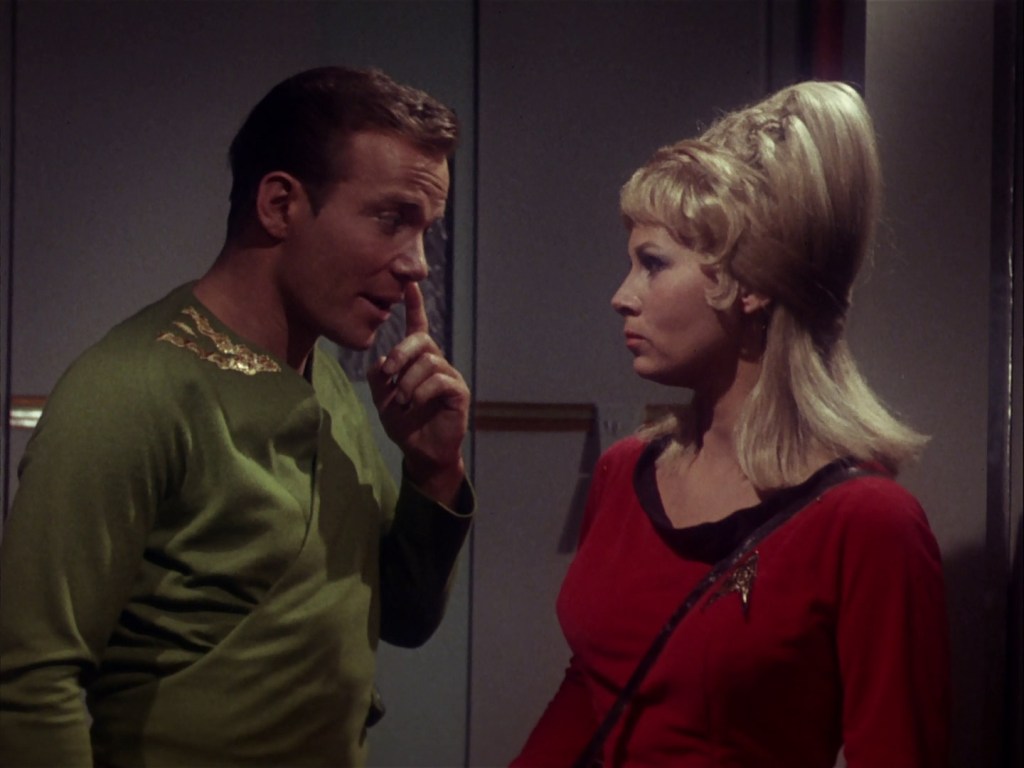
In the teaser, we see Kirk on the surface of Alfa 177 in his standard uniform, including the delta insignia on his chest. However, when he beams up, the delta is missing. Later, negative Kirk tricks positive Kirk and escapes. Positive Kirk is wearing the green tunic, and negative Kirk is wearing the standard tunic. Negative Kirk swaps uniforms with positive Kirk (whom he’s knocked out) and is now wearing the green tunic. That means that positive Kirk should be left with his standard uniform, but when he shows up on the bridge he’s wearing the green one!
Possibly this was a production scheduling issue? Maybe they had to move so quickly that there wasn’t time for Shatner to change, but it makes things confusing.
The other notable costume in this episode is the Alfa 177 canine’s. 2/5
Make-up and Hair
Here’s another area where continuity in this episode is a problem. When negative Kirk attacks Janice, she scratches him on the face and those scratches bounce around from scene to scene. Near the end of the episode, when the two Kirk’s face off on the bridge, there are close-ups of negative Kirk where the scratches are on the wrong side of his face. It’s possible that they flipped the film to fix an eye line problem, or it was a make-up error.
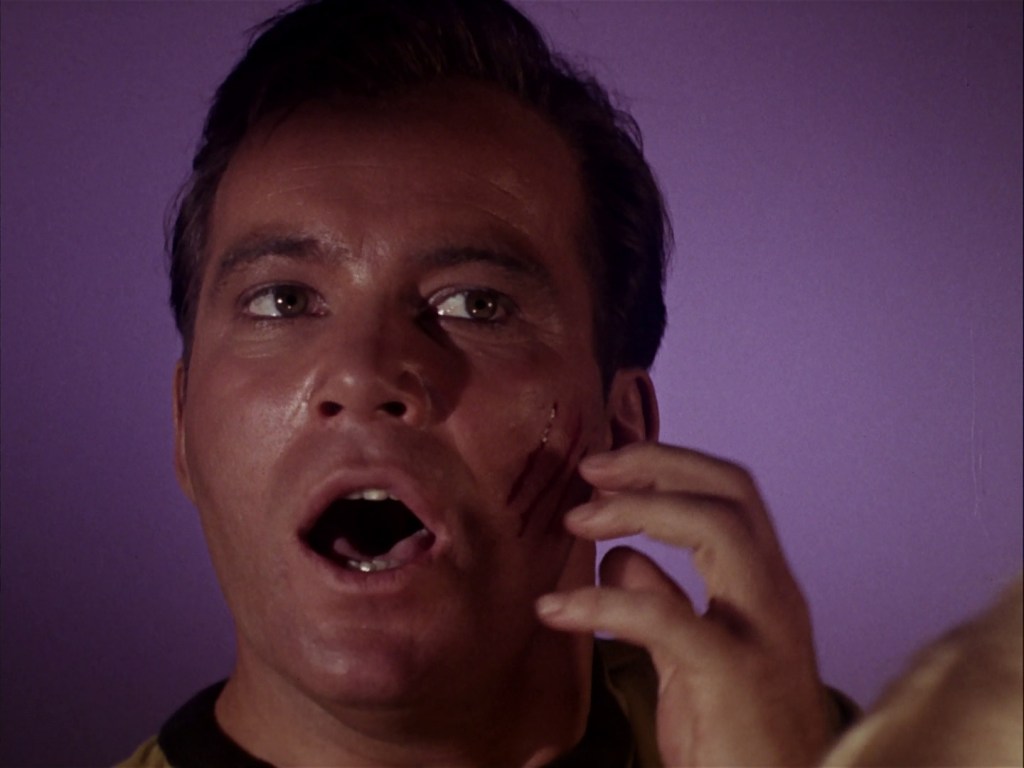
Negative Kirk gets some dreamy eye make-up which I enjoy. 2/5
Visual Effects
I mentioned Sulu using a phaser to heat rocks. That glow effect is really the most interesting effect in the episode and it works really well. 5/5
Music
The score for this episode is written by Sol Kaplan. He does a good job pushing the viewer to feel unsettled. There’s also a nice melancholy theme that underscores some of Spock’s dialogue about his dual identity. 4/5
Acting (series regulars and guests)
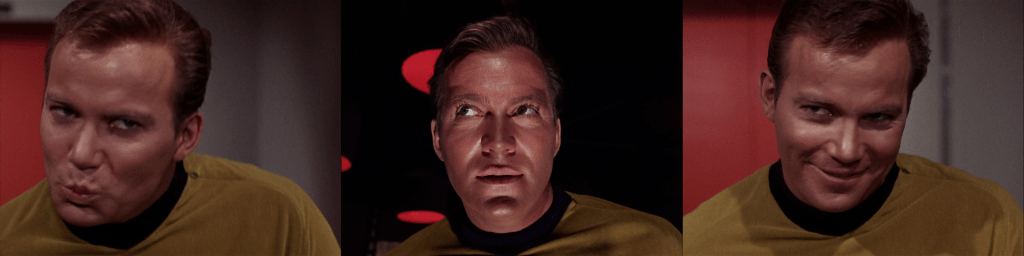
I’ve already talked a little about Shatner’s over the top performance. It’s certainly memorable but not necessarily in a good way. The rest of the cast is very solid. Grace Lee Whitney does well with some very challenging moments, and Nimoy and Kelley have pretty much found their characters at this point. 3/5
Direction (coherent, memorable)
This episode was directed by Leo Penn. I’ve read that he went a day over schedule so he was never invited back. I have trouble believing he went a day over schedule when there are so many continuity issues in this episode. Regardless, he does create a few memorable moments.
When negative Kirk is first beamed aboard, Penn does a wonderful close-up of the maniacal Kirk on the transporter pad. There is a lighting change which makes it even more dramatic. The scenes of the two Kirks facing off in engineering are also well done. There are no split screen effects. It’s all done with doubles and shadows and it’s quite effective. 3/5
Philosophy
Is it thought-provoking?
It’s definitely thought-provoking. Spock sums it up well when he tells Kirk and McCoy that they have an opportunity to examine the Human mind; the good and evil roles in a man. He says, “we see here indications that his negative side makes him strong.” That certainly seems to be the thesis of the episode. Humans have a positive and negative side, and it’s the negative side that gives leaders the strength to lead. My initial reaction is to reject this.
The negative Kirk attempts to sexually assault Yeoman Rand. We know Kirk has feelings for her that he must never act on, but the suggestion here is that some part of Kirk is a rapist. Further, that it’s that part which makes him strong. That’s basically the definition of toxic masculinity, I’d say. When I look at myself as an example, I don’t see the possibility of that in me. I cannot imagine acting like negative Kirk does.
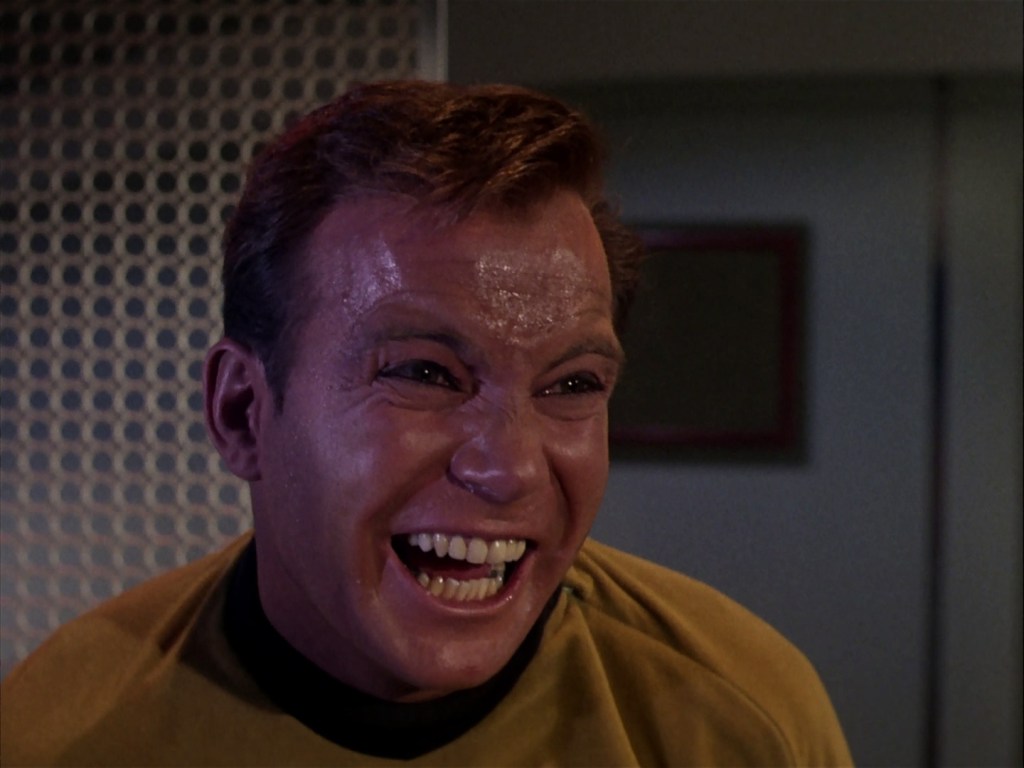
Possibly that’s Matheson’s point. This interaction between good and evil is happening subconsciously, and they balance each other out. Spock tells McCoy that his intelligence wins out over both his halves (Vulcan and Human). There would seem to be no way to prove this either way. I’d like to think I don’t have any of that in me, and possibly Kirk thought that too. Unfortunately, now his entire crew knows he does. Especially Rand, who is a survivor of Kirk’s violence.
I go back and forth on this when I think about it and rarely come to a conclusion. It’s definitely an idea to ponder. 5/5
Does it deal with a moral or ethical issue?
Perhaps the ethical issue here is whether or not a unified Kirk ought to be held responsible for the actions of his separated negative side. The episode seems to decide he shouldn’t. At the end of the episode, Rand almost apologizes to Kirk, when he’s the one who assaulted her! I think I’m made more uncomfortable by Kirk because he never really offers a satisfying apology.
The other thing that I really dislike at the end of this episode is that Spock says to Janice that “the imposter had some interesting qualities, wouldn’t you say, Yeoman?” and he smirks. To me, this feels akin to saying something like “she asked for it”. It’s super-gross. I don’t think it’s in line with Spock’s character. I think it’s probably wishful thinking on behalf of Matheson, and perhaps many straight men. We see it even today in the so-called “manosphere” that promotes aggressive, hyper-masculine ideals.
If this counts as an ethical issue, I don’t think it’s dealt with well or in a very Trekkian way so I have to rate this lowly. 1/5
Is it consistent with Trek’s optimism and Humanism?
Possibly, part of what the episode is trying to say is that Humans have the ability to control their negative sides, and that that makes them strong. That feels like a Roddenberry vibe, moving towards the perfect man but acknowledging that we’re not there yet. However, I’m left with this strong dislike for Kirk, and disappointment in Spock. I think it’s the optimism that I’m missing. 2/5
IDEA (Inclusion, Diversity, Equity, Accessibility)
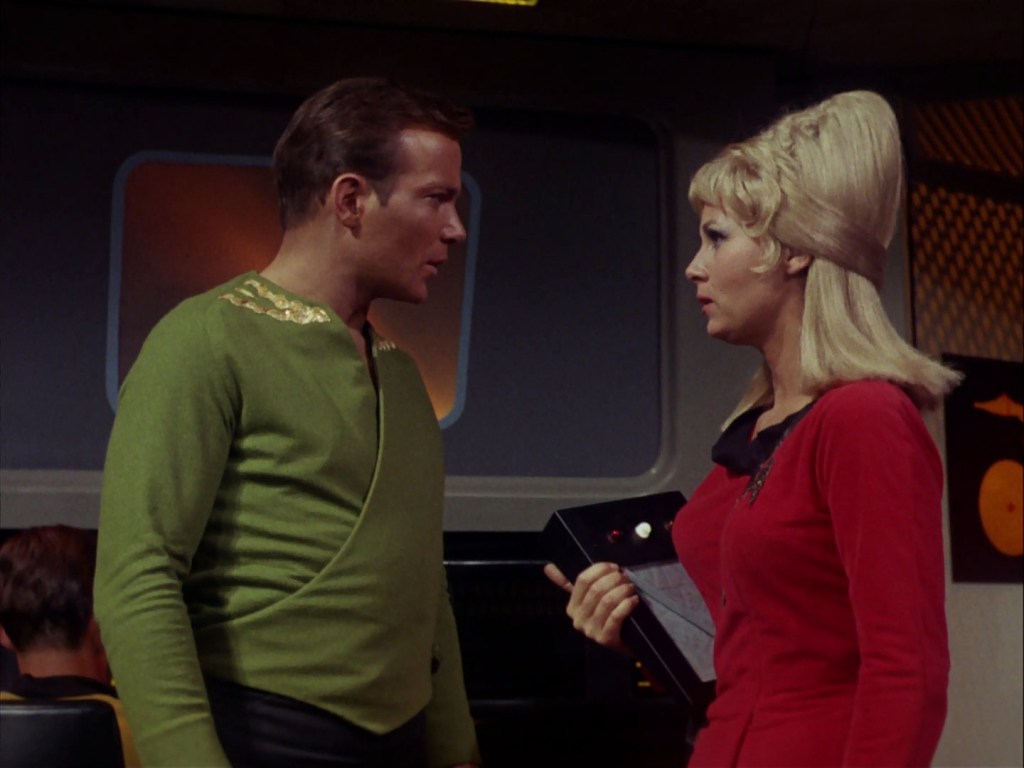
What comes up for me here is back to gender issues. If the situation were reversed, and Janice Rand had been split into a negative and positive self, would she have been treated the same way Kirk was? The answer is definitely “no”. Possibly how Rand is treated in this episode is the best that could have been expected in the 1960s, but it doesn’t feel like the best we could do in the 23rd century. They don’t even give her the rest of the day off! 1/5
Conclusion
My ratings for this episode add up to 60/100 – the lowest so far. It’s watchable, and Shatner is entertaining, but I don’t like dwelling on it.


4 comments