
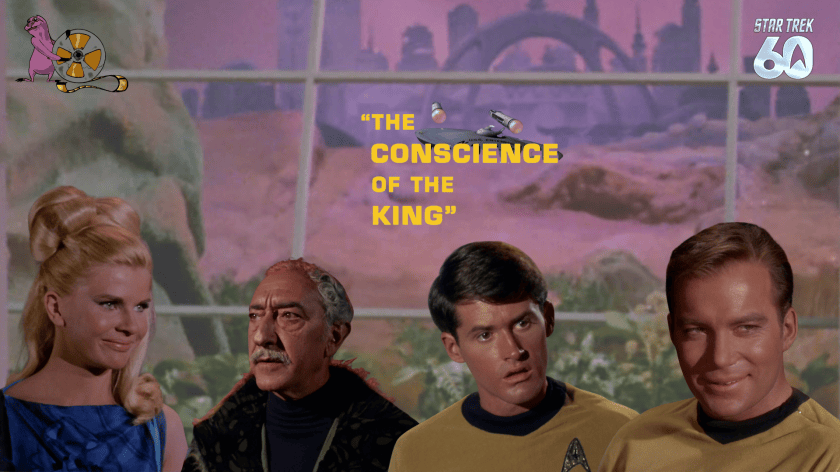
“All this power, surging and throbbing, yet under control. Are you like that, Captain?”
Last night I watched “The Conscience of the King”. This was both the 13th episode produced, and 13th episode aired. The original air date was December 8, 1966. The episode was written by Barry Trivers and is one of my favourites.
Story
Is it a coherent story?
While transporting a troupe of Shakespearean actors, the Enterprise finds itself at the centre of a murder mystery. It turns out the lead actor may be a disgraced colonial governor who was responsible for the execution of 4,000 colonists. 5/5
Is it enjoyable to watch?
I find this episode gripping from the opening frame which is a close-up of a dagger. There’s terrific music, a great mystery, an excellent guest cast, and it reveals an interesting facet of Kirk’s past. 5/5
Is the dialogue strong and/or memorable?
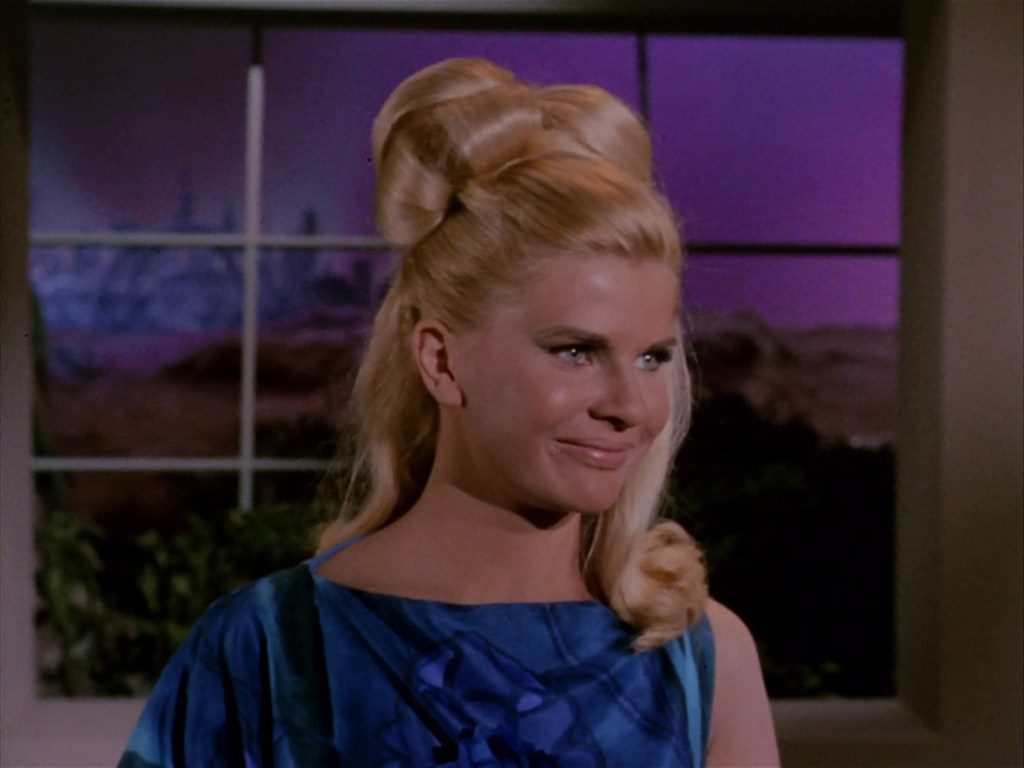
In addition to the dialogue that is borrowed from Shakespeare, Trivers writes some very compelling dialogue, especially for Kirk and the young Lenore Karidian. Lenore is positioned from her first moments as a potential love interest for Kirk. Though she’s only 19 years-old, Kirk refers to her as “very impressive” and she calls him a “brash young man” but later concedes that second impressions are different.
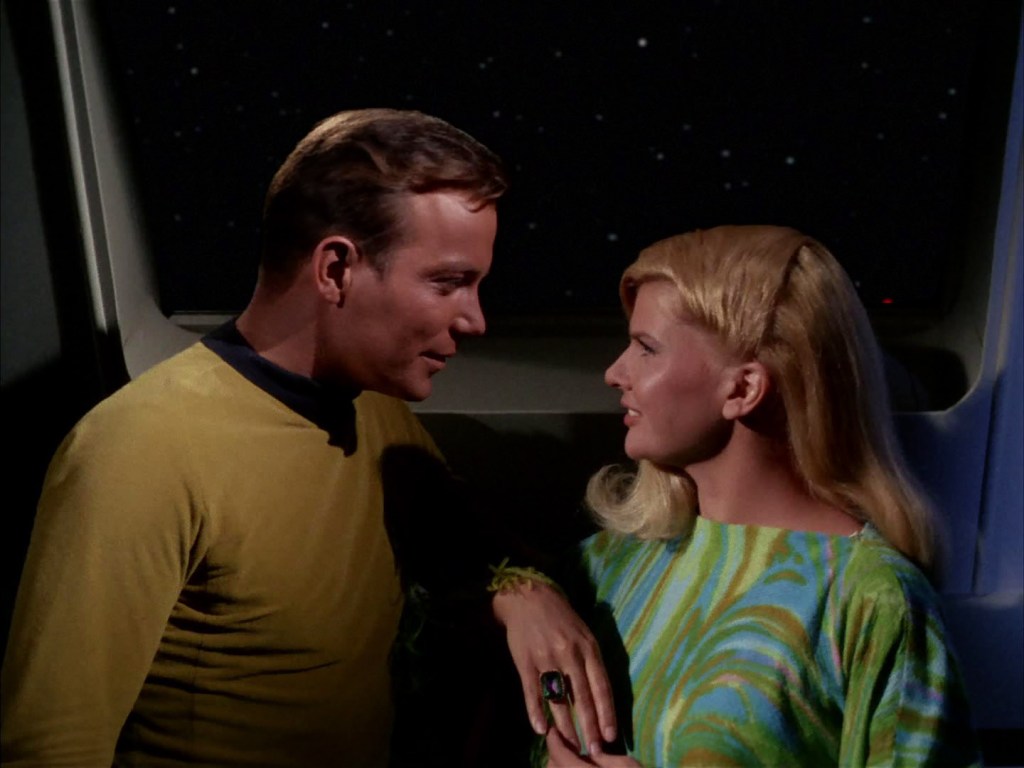
Later, there’s a particularly wonderful scene that takes place on the Enterprise observation deck where Lenore is talking about the power of the ship and wondering if Kirk shares it. She calls him the “Caesar of the stars”. Kirk has a very memorable line: “Worlds may change, galaxies disintegrate, but a woman always remains a woman”.
Anton Karidian is also well served in the dialogue department. Kirk asks him what he was 20 years ago and Karidian replies, “younger, Captain. Much younger”. That’s always stuck with me. Also, his cry of “I am tired!” which is a featured gif that I have used a great deal. 5/5
Does it serve the main cast well?
As has become typical for first season episodes, Kirk is served well. The story is very much his and we get to see some different dimensions of him. There is Kirk the flirt and the lover, but also Kirk the survivor of trauma, and Kirk the leader and protector of men. We learn that Kirk, around age 13, was living on an Earth colony on Tarsus IV when an “exotic fungus” destroyed most of the colony’s food. The colony’s governor, Kodos, made the decision to execute half of the colony’s population to ensure the survival of the other 4,000. Kirk was one of nine survivors who actually saw Kodos and could potentially identify him later in life.
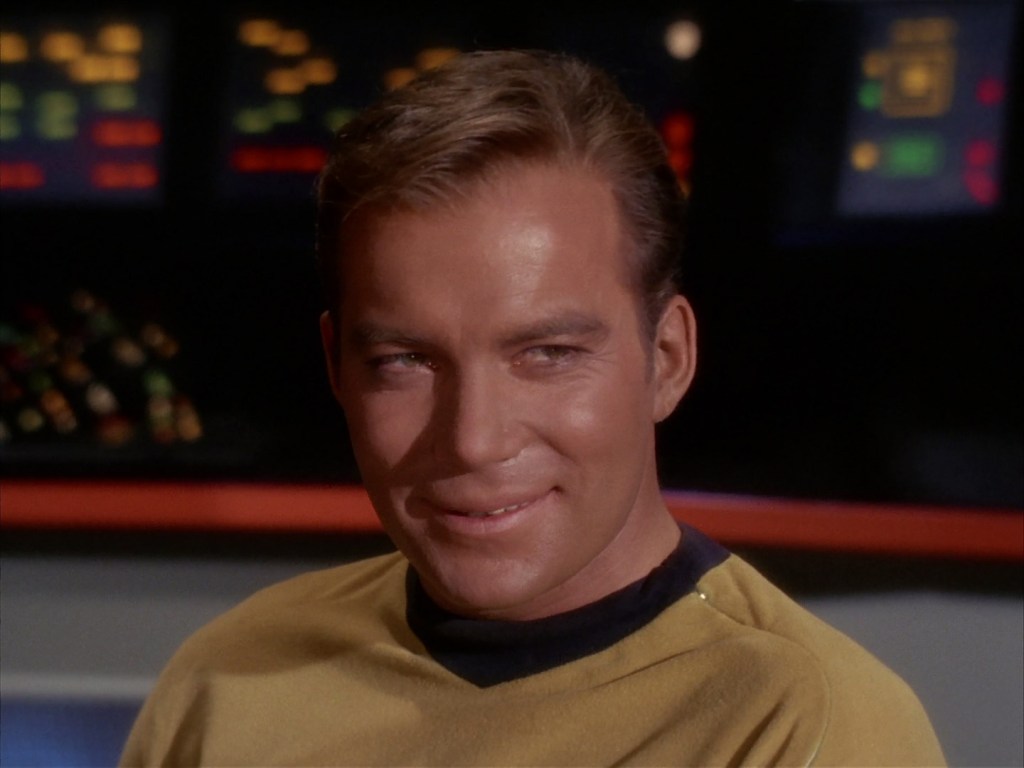
This would seem to be a pretty seminal event in a child’s life. In the present, Kirk’s old friend, Tom Leighton, believes that Kodos has taken a new identity, that of the actor Anton Karidian. When Kirk, Spock, and McCoy are investigating this possibility, Spock is quite certain that Leighton was correct. Kirk is less sure. He says, “logic is not enough. I have to feel my way”. This might as well be the motto by which Kirk lives his life. It seems to hold true for most of his future decision-making. He accepts logical thoughts from Spock, emotional thoughts from McCoy, and then tries to feel his way to the best outcome. 5/5
If there are guest or recurring characters, are they memorable or interesting?
Uhura has another opportunity to sing in this episode. She sings a song called “Beyond Antares”, the lyrics for which were either written by Barry Trivers or Gene L. Coon and the music for which was written by Wilbur Hatch. The original song was longer, but the lyrics we hear on screen are:
The skies are green and glowing,
Where my heart is, where my heart is,
Where the scented lunar flower is blooming:
Somewhere, beyond the stars…
Beyond Antares.
I’ll be back, though it takes forever.
Forever is just a day.
Forever is just another journey.
Tomorrow a stop along the way.
Then let the years go fading,
Where my heart is, where my heart is,
Where my love eternally is waiting
Somewhere, beyond the stars…
Beyond Antares.
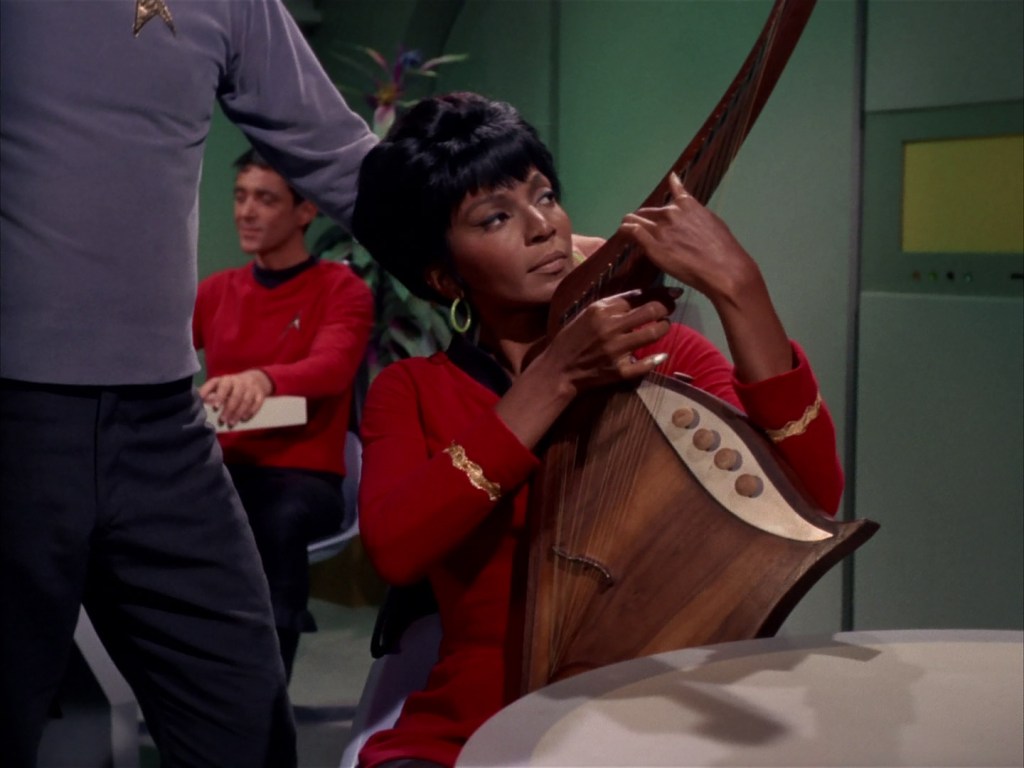
Uhura accompanies the song on a Vulcan lyre or lute. Where her song in “Charlie X” was clearly captured while filming the scene, this one was pre-recorded. The quality is definitely better but it’s fairly obviously a recording.
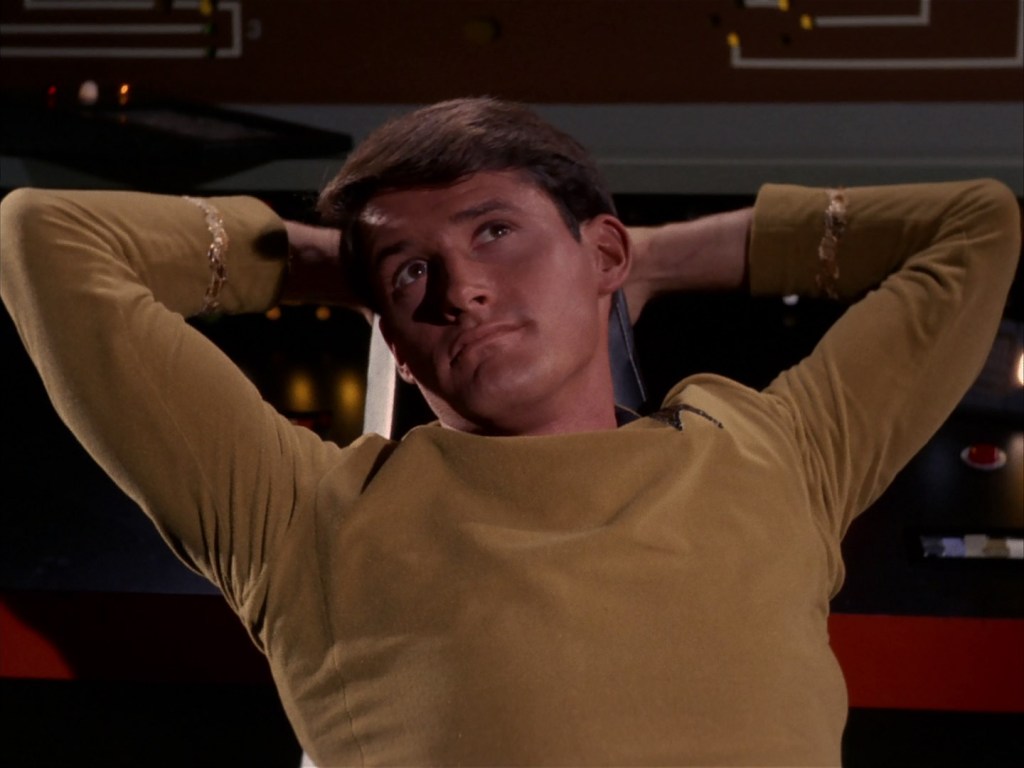
She’s singing at the request of my Trek boyfriend in his second and final performance: Bruce Hyde as “Star Service Lieutenant Kevin Riley”. It turns out, Riley is also one of the nine survivors who might identify Kodos. Though he has become a bridge officer, Kirk transfers him down to engineering in hopes that he won’t encounter Karidian. That doesn’t stop someone from trying to poison Riley’s milk by spraying something into his glass (the Jamestown pattern made by the Fostoria Glass Company). Riley is sent to sickbay and McCoy saves his life. Riley overhears McCoy making a log entry which raises the suspicion that Karidian is Kodos and Riley goes off in search of the actor. It’s a good episode for Riley and I’m not sure why they never brought him back.
The other two major guest stars are Arnold Moss as Kodos/Karidian and Barbara Anderson as Lenore. They’re both quite memorable, but I especially love Kodos/Karidian. He’s a fascinating character that I wish we saw more of (there have been some novels in which he appears). Lenore is usually mentioned when people think of “Kirk’s women”. It’s a role that Anderson must have had a lot of fun with. 5/5
World-building
Does it contribute positively to the Trek Universe?
We get several new names of planets and colonies, including the intriguing moniker of Planet Q. We learn that Shakespeare is still performed in the 23rd century. In fact, Shakespeare will have an enormous influence on the rest of TOS, the original movies, and TNG. As a student of English, I love this. As an aside, I also love that paper books are still a thing in the 23rd and 24th century. Most TOS crewmembers have books in their quarters.
The Galactic Cultural Exchange Project is a wonderful idea. The Karidian Company of Players is part of this project, working to improve mutual cultural understanding between species.
We learn of a Federation transport vessel called the Astral Queen, under the command of Jon Daily. I always enjoy seeing or hearing about different Federation ships. It really makes the Trek universe feel larger and more lived in. 5/5
Is it consistent with the rest of canon?
We get some interesting details about Vulcans in this episode, not all of which completely jibe with future canon. For example, in a conversation with McCoy, Spock says, “My father’s race was spared the dubious benefits of alcohol.” This is an interesting tidbit about Vulcans that will occasionally be echoed later in the franchise. However, McCoy’s response to this is “Now I know why they were conquered” which is quite curious. I tend to ignore it because it doesn’t seem to be something that ever happened.
Later, when Spock has done some investigations of his own into the Kodos/Karidian issue, Kirk accuses him of meddling in his affairs. McCoy defends Spock, saying it’s his job to take an interest in the captain’s affairs. This helps establish what the duties of the first officer are and we’ll see many future examples of this throughout the franchise. 4/5
Is there something new and unique?
What’s new is maybe just the notion of travelling theatre troupes in the 23rd century. It’s interesting to know that future Humans are still interested in theatre when there doesn’t seem to be any television or film (we’ll learn more about those later). 3/5
Does the science seem plausible?
I’m thinking here about AI. Both Kirk and Spock make use of the Enterprise computer to do research on Kodos/Karidian and the way they engage with the computer reminds me very much of how some people engage with large language models today. They use the computer to sift through vast quantities of data quickly, and locate patterns. That seems like a reasonable use of the technology to me, provided the ethical and environmental concerns have been appropriately dealt with.
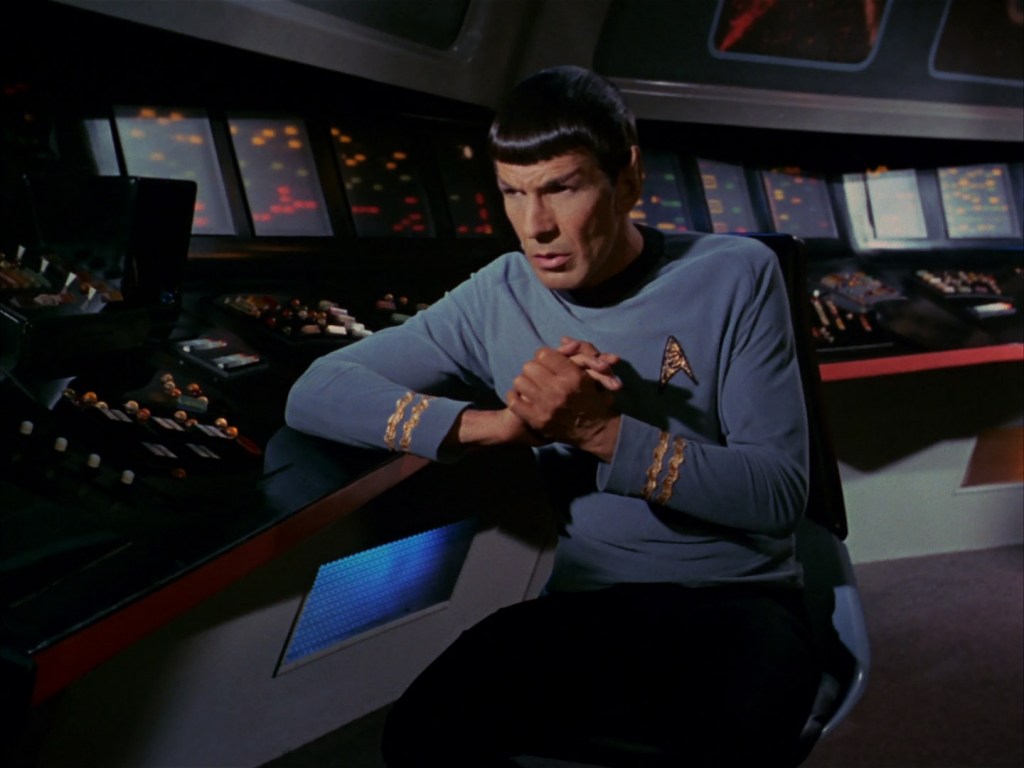
Kirk also uses the computer to do a “voice print test” to see if that can reveal whether Karidian is Kodos. That does seem plausible to me but I feel like DNA might be more conclusive. In 1966 it would be another 20 years before DNA was used for forensics like this. 5/5
Production
Production design (sets, props)
I made note here of the wonderful mid-century set decoration in Tom and Martha’s quarters. If you haven’t got the book Star Trek: Designing the Final Frontier by Dan Chavkin and Brian McGuire I highly recommend it. They’ve done an excellent job of cataloging many of the found items used as set dec in TOS, including some of the sculptures in this episode. I also noted that the door to the Leighton home has a standard door knob rather than sliding doors.
We get to see a couple of new Enterprise environments in this episode. First, there’s the aforementioned observation deck which is a great set. Second, there’s the ship’s theatre which looks to me like a re-dress of engineering. 5/5
Costumes
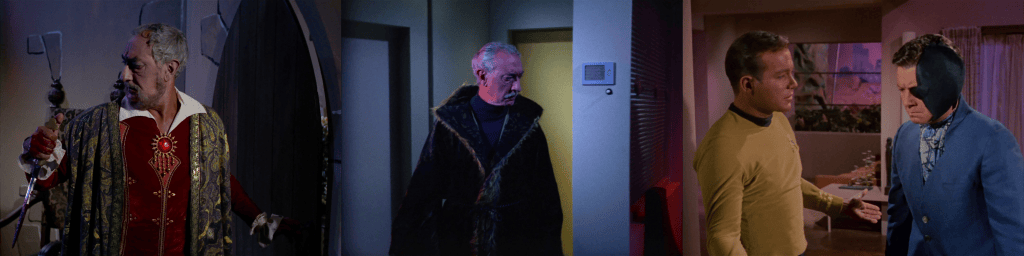
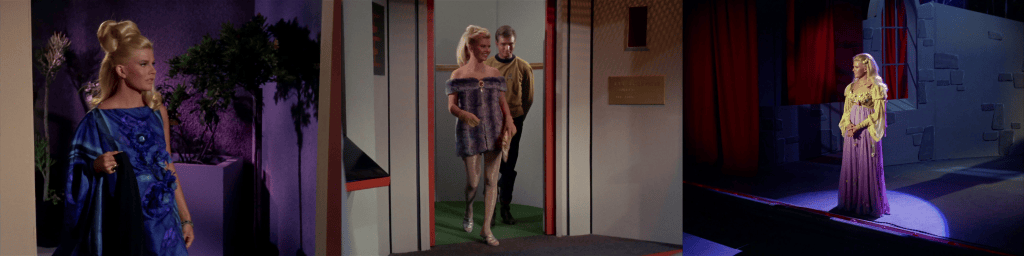
The costuming in this episode is quite good. I imagine that several of the pieces worn by the acting troupe are rented but they were well chosen. Tom and Martha Leighton’s costumes are quite memorable. Tom’s eye patch is quite singular. I believe we will see his jacket re-used later on but I can’t immediately place it. Lenore gets a number of costume changes and all of Theiss’ designs for her are wonderful. The fur number she wears on the bridge definitely shows up again in future episodes. I really enjoy the furry robe Karidian wears when Kirk visits him in his quarters. 5/5
Make-up and Hair
I was really focused on the costumes for this episode and didn’t notice much about the hair. Lenore gets a handful of different styles which are all lovely. I didn’t note anything in the make-up department. 4/5
Visual Effects
This episode is light on visual effects. In the remastered edition, the team added moving stars in the observation deck windows. It’s subtle but really helps to sell the Enterprise in motion. I appreciate that they went to the effort to do it. 4/5
Music
The music for this episode was composed by Joseph Mullendore (credited simply as “Mullendore”). Parts of it would be re-used in several future episodes. Right from the opening frame, the music is great and really helps to set the tone for the episode. At Tom and Martha’s cocktail party, there is a swinging lounge version of the TOS theme song that was arranged by Mullendore. It does kind of pull me out of the episode but I love that it exists. The music in the observation deck scene is wonderful. I already mentioned that Uhura’s “Beyond Antares” was written by Wilbur Hatch. 5/5
Acting (series regulars and guests)
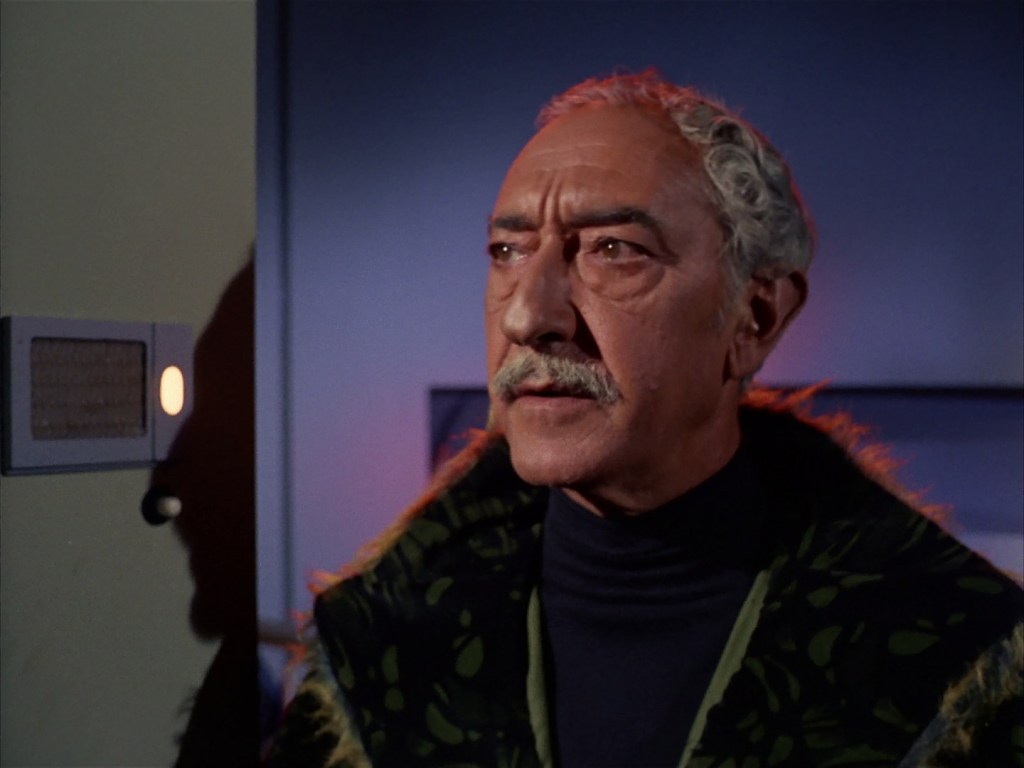
I think Arnold Moss does a terrific job as Kodos/Karidian. He began his career in the 1930s on Broadway and he brings a very theatrical, Shakespearean quality to the role. He’s also given great dialogue to work with.
Barbara Anderson does quite well with Lenore. She would have been around 21 (playing 19). I often seem to think that actors on TOS are older than they actually are. She gets some very interesting things to play. It’s a nice bit of synchronicity that Trivers has her playing Ophelia in the play at the end of the episode. Ophelia, of course, goes mad, and we see here that Lenore has also gone mad. She gets to end with the memorable line, “All the ghosts are dead. I’ve buried them.” Which feels like it could be Shakespeare.
I also noted that this episode has a lot of extras. The theatre and party scenes have a lot of people in them. Unfortunately, we’d see less and less of this as budgets became tighter through the rest of the series. 5/5
Direction (coherent, memorable)
This episode was directed by Gerd Oswald. It’s interesting to me that Oswald directed this episode, one of my favourites, as well as “The Alternative Factor” which I find barely watchable. He seems to have a great handle on this episode. There’s a really nice overhead shot of the bridge which I think gets re-used in the future.
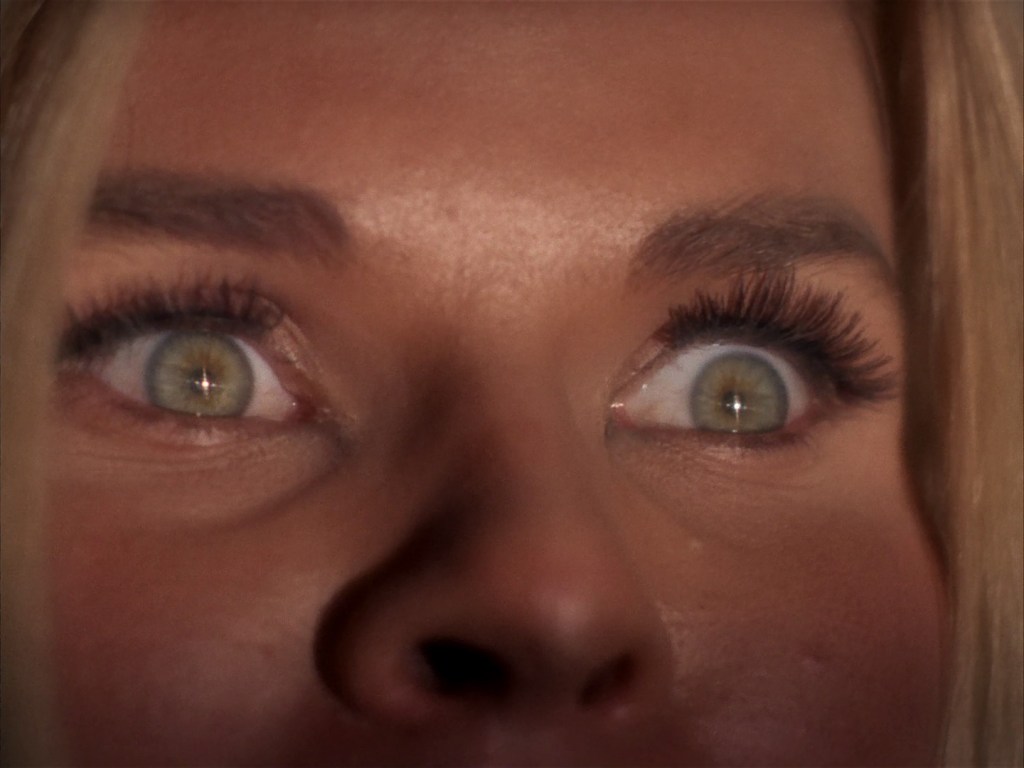
I think this is also a good place to mention Jerry Finnerman who was the director of photography for the first two seasons of TOS. Finnerman painted those sets with amazing light that really helped sell the limited real estate as a vast starship. In this episode, there’s a “double red alert” when the assassin plants a phaser on overload in Kirk’s quarters. The red alert lighting, and the wonderful colourful lights in the corridor are terrific. When Kirk visits Karidian in his quarters there is some terrific moody lighting. The close-up of Lenore at the end of that scene is very dramatic. Later, there’s a terrific close-up of Lenore with stars reflected in her eyes. Finnerman’s contribution to the series really can’t be over-estimated. 5/5
Philosophy
Is it thought-provoking?
A mystery is always thought-provoking. A story is engaging when the audience has to think about it. In this case, it’s a fairly simple mystery, but I still think it’s engaging. 4/5
Does it deal with a moral or ethical issue?
I think there are two ethical issues to consider here. First, is the Tarsus IV dilemma. Kodos knows there’s not enough food to support 8,000 colonists. He makes the decision to select 4,000 for execution to ensure the survival of the other half. Spock notes this as “his own theories on eugenics”. I think the correct choice would have been to leave things to chance. Some people would choose not to eat in favour of feeding their children, etc. It’s about autonomy. Also, one never knows whether some kind of relief might show up. I think I’ve said before that I’m against execution. That’s true here as well.
The second issue is Kirk’s. Once he identifies that Karidian is Kodos, what does he do? Will he take personal revenge or turn Kodos over to the authorities? We see Kirk struggle with this, but only briefly. He would definitely have made the decision to turn Kodos over. We see this as soon as Kirk prevents Riley from killing Kodos. He realizes that personal vengeance isn’t going to satisfy justice. 5/5
Is it consistent with Trek’s optimism and Humanism?
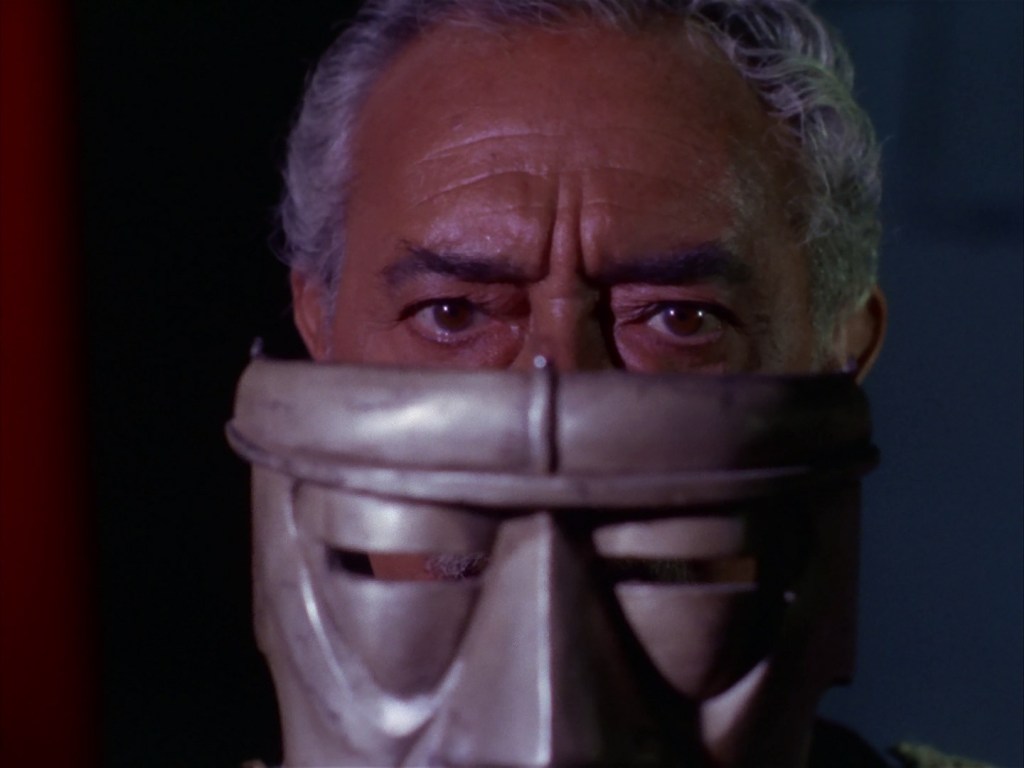
Yes and No. The fact that Kodos is practicing his own form of eugenics in the 23rd century, and that his daughter is willing to murder to protect him, suggests Humanity hasn’t evolved much (I bet Roddenberry would never have had that happen in TNG’s 24th century). However, the fact that Kirk would do the right thing when he uncovers the perpetrator gives us hope that there are people who will not succumb to their base natures. Kirk is definitely the hero of the piece because he does not resort to vengeance. 5/5
IDEA (Inclusion, Diversity, Equity, Accessibility)
What comes up for me here is gender roles and power imbalances (yet again). McCoy is proving to be the most troubling in this area. He refers to Lenore as “that little Juliette” and a “pretty exciting creature”. I think he would be around 39 years-old, talking about a 19 year-old. It comes across as creepy and I doubt we’d see it happen today. Kirk is only a few years younger and he actually pursues Lenore. She’s clearly more sophisticated than most 19 year-olds but these are older men in positions of authority who should probably know better.
The other thing that comes up for me is mental health treatment. McCoy tells Kirk that Lenore remembers nothing of her breakdown and that she’ll receive the best of care. Based on what we have seen at the Tantalus Colony in “Dagger of the Mind” one questions whether she’s in the right hands for care. 2/5
Conclusion
My ratings for this episode total 91/100 – tying for first place with “The Corbomite Maneuver”.
 Purple Sloth Productions
One of my favourite episodes mainly because of the ethical questions it raises.
LikeLike